
March 4th is
Pound Cake Day
Marching Band Day
National Grammar Day *
Toy Soldier Day *
__________________________________________
MORE! Rebecca Gratz, Pearl White and Miriam Makeba, click
__________________________________________
WORLD FESTIVALS AND NATIONAL HOLIDAYS
Argentina – Mendoza:
Fiesta Nacional de la Vendimia
(Grape harvest festival)
Malaysia – Kuala Terengganu:
Sultan’s Installation Anniversary
Mongolia – Hatgal:
Khövsgöl Festival of Ice
__________________________________________
On This Day in HISTORY
AD 51 – Nero, future Roman emperor, is given the title princeps iuventutis (first of the equestrian order)
1351 – Ramathibodi becomes the first king of Ayutthaya (now part of Thailand)
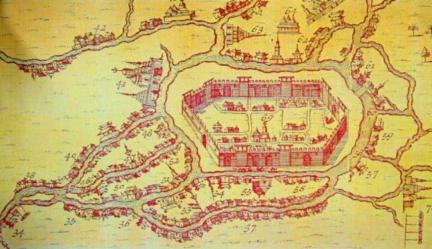
1394 – Prince Henry the Navigator of Portugal is born
1493 – Christopher Columbus arrives back in Lisbon, Portugal, aboard his ship Niña
1519 – Hernán Cortés arrives in Mexico
1628 – The Massachusetts Bay Colony is granted a Royal charter
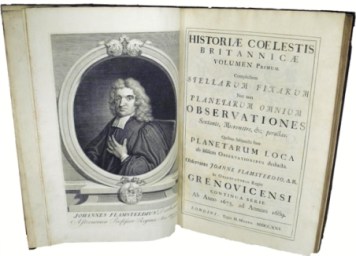
1675 – John Flamsteed is appointed as the first Astronomer Royal of England
1678 – Antonio Vivaldi born, major Italian Baroque composer
1681 – England’s King Charles II grants William Penn’s charter to (future) Pennsylvania
1766 – British Parliament repeals the Stamp Act, which faced bitter and violent opposition in the American colonies
1778 – Continental Congress votes to ratify Treaty of Amity and Commerce and Treaty of Alliance, the first treaties entered into by the U.S. government
1781 – Rebecca Gratz born, Jewish American educator and philanthropist; co-founder of the Female Association for the Relief of Women and Children in Reduced Circumstances in 1801, which aided widows and orphans after the American Revolutionary War; also helped found the Philadelphia Orphan Asylum in 1815, and served on its board for the next 40 years; Superintendent and president of the first Hebrew Sunday School in America (1838-1864); co-founder in 1819 of the Female Hebrew Benevolent Society; her advocacy helped establish a Jewish foster home, the Fuel Society, and the Sewing Society; Gratz College is founded in her memory
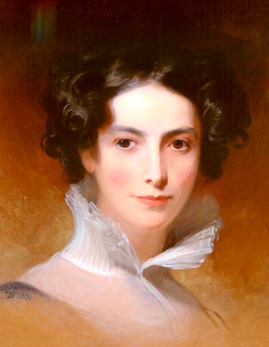
Rebecca Gratz, by Thomas Sully – 1831
1789 – U.S. Congress: first meeting in New York declares the Constitution is in effect
1791 – Vermont is admitted as the 14th U.S. state, the first addition to the original 13 American states
1794 – The 11th Amendment to the U.S. Constitution is passed by the Congress, which limits the jurisdiction of the federal courts to automatically hear cases brought against a state by the citizens of another state; later interpretations expand this to include citizens of the state being sued
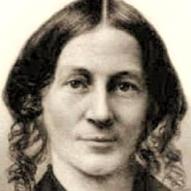
1815 – Myrtilla Miner born, American educator and abolitionist, establishes the Normal School for Colored Girls in Washington DC, which will merge with other schools to become the University of the District of Columbia
1826 – The first U.S. railroad is chartered, the Granite Railway in Quincy MA
1837 – The state of Illinois grants a city charter to Chicago
1861 – The Confederacy adopts the “Stars and Bars” flag
1875 – Enrique Larreta born, Argentine modernist novelist, La gloria de don Ramiro; also Argentine Ambassador to France (1910-1919)

1877 – Tchaikovsky’s ballet Swan Lake premieres at the Bolshoi Theatre in Moscow
1880 – Halftone engraving is used for the first time as the “Daily Graphic” begins publishing in New York City
1881 – Eliza Ballou Garfield becomes the first mother of a U.S. President to live in the executive mansion
1891 – Lois W. born, American activist, co-founder of Al-Anon
1889 – Pearl White born, American silent film star; a former circus bareback rider, she was one of the first women of “action” in the movies, who did the majority of her own stunts in serial films, most notably in The Perils of Pauline; unlike the usual screaming-in-terror-and-fainting heroines, she was plucky and resourceful; but a spinal injury’s constant pain from a stunt gone wrong led to drug and alcohol abuse, and her career plummeted; she died of a “liver ailment” at age 49
1893 – George Washington Murray is elected to the U.S. House of Representatives from South Carolina, the only African American Congressman during his tenure (1893-1895)
1899 – Elizabeth Wood born, taught English at Vassar (1922-26); involved in social welfare in FDR’s Public Works Administration in 1934, where her plans to create housing that included play areas and racial diversity were undercut when residents were not involved in planning; the first executive secretary of the newly created Chicago Housing Authority (CHA) in 1937

Elizabeth Wood at 1945 dedication of Altgeld Gardens
1902 – The American Automobile Association is founded in Chicago
1908 – The New York board of education bans whipping students in school
1913 – Marguerite Taos Amrouche born, Algerian author and singer, one of the first Algerian women to publish a novel in French, collected and interpreted Kabylie Berber songs
1914 – Doctor Le Fillatre, dean of the French Academy of Medicine, successfully separates Siamese twins Susanna and Madeline, born conjoined facing each other
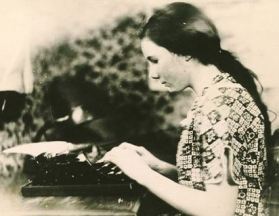
1914 – Barbara Newhall Follett born, American child prodigy who began composing poetry at age five, published her first novel, The House Without Windows, when she was 12, and The Voyage of the Norman D. when she was 14; but when her father abandoned the family for younger woman, she was devastated, unable to write for some time; she and her mother fell on hard times during the Depression; at 16, she was working as a secretary, but she began writing again, including the novel Lost Island, and a travelogue called Travel Without a Donkey; she married at 19, but six years later, she discovered her husband was unfaithful; according to a statement made by the husband, after a quarrel she left their apartment with $30 in her pocket, but he didn’t report her missing for two weeks, because he was “waiting for her to return”; though suspicious of foul play, the police turned up no evidence in their investigation, and what happened to her is still a mystery
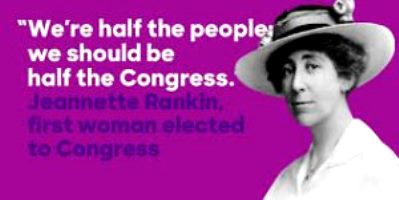
1917 – Jeanette Rankin of Montana takes her seat as the first woman elected to the U.S. House of Representatives; an avowed Pacifist, she would vote against both World Wars, and years later, march against the Vietnam War
1925 – Calvin Coolidge takes the oath of office in Washington, DC., the first presidential inauguration broadcast on radio
1931 – Alice Rivlin born, American economist and politician: Congressional Budget Office Director (1975-1983); White House Office of Management and Budget Director (1994-1996); Vice Chair of the Federal Reserve System (1996-1999)

1932 – Miriam Makeba born, South African singer, civil rights and anti-apartheid activist, who helped popularize African music around the world
1933 – U.S. President Franklin Roosevelt gives his inaugural address: “We have nothing to fear, but fear itself”
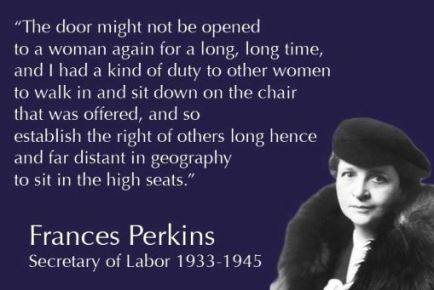
1933 –Frances Perkins is appointed as Secretary of Labor, the first woman to serve in a U.S. Presidential cabinet
1942 – The Stage Door Canteen opens on West 44th Street in New York City
1942 – Lynn Sherr born, American broadcast journalist, correspondent for the TV news magazine 20/20; feminist activist, honored in 1989 and again in 1992 with the Planned Parenthood Margaret Sanger Award “for exceptional coverage of reproductive rights and healthcare”

1946 – Patricia Kennealy-Morrison born, American scifi/fantasy and mystery author of The Keltiad, and the Rennie Stride mystery series; as editor-in-chief of Jazz & Pop magazine in the late 1960s, she was one of the first women rock critics
1947 – France and Britain sign an alliance treaty
1950 – Walt Disney’s animated Cinderella released across the U.S.
1952 – U.S. President Harry Truman dedicates the Courier, the first seagoing radio broadcasting station
1954 – In Boston, the Peter Bent Brigham Hospital (now part of Brigham and Women’s Hospital) reports Dr. Joseph E. Murray performs the first successful kidney transplant
1954 – Irina Ratushinskaya born, Russian writer and poet, Soviet dissident who was sent first to a labor camp in 1983, then prison, including a year in solitary confinement, before her release in 1986; Grey is the Colour of Hope is a memoir of her incarceration

1974 – People magazine’s first issue goes on the newsstands
1975 – Queen Elizabeth knights Charlie Chaplin
1983 – Bertha Wilson is appointed as the first woman judge on Canada’s Supreme Court

1986 – Today debuts as England’s newest, national daily newspaper
1987 – Ronald Reagan addresses the nation on the Iran-Contra scandal, acknowledging his overtures to Iran “deteriorated” into an arms-for-hostages deal
1989 – Time, Inc. and Warner Communications Inc. announce their merger plans
1994 – Bosnia’s Croats and Moslems sign an agreement to form a federation in a loose economic union with Croatia
1997 – U.S. President Clinton bars federal spending on human cloning
1998 – In Oncale v. Sundowner Offshore Services, the U.S. Supreme Court rules that federal law banning on-the-job sexual harassment still applies when both parties are the same sex
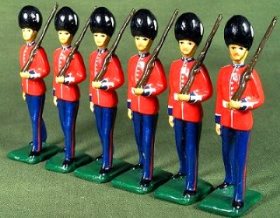
1999 – Toy Soldier Day * is started by The Army of Toy Soldiers fan club, whose members hold events dressed in their “uniforms,” and volunteer for charity work in costume, such as toys drives for disadvantaged and sick children
2002 – Canada bans human embryo cloning but permits government-funded scientists to use embryos left over from fertility treatment or abortions.
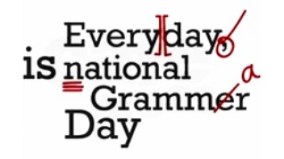
2008 – National Grammar Day * is launched by Martha Brockenbrough, founder of the Society for the Promotion of Good Grammar
2012 – Vladimir Putin is reelected in Russia’s presidential election
2014 – Italy releases 2 million Euros to save the ancient city of Pompeii after flooding causes some walls to collapse

Flood-damaged Temple of Venus at Pompeii
__________________________________________

 Nicole Plyler Fisk
 Gene Howington
 FFS Guest Blogger
 Joy of Fishes
 Chuck Stanley
 shortfinals
 Terry Welshans
 ann li-summers
 wordcloud9


 Flowers For Socrates
You were right, it is women’s history month!
My smile grows wider as i read.
This confused me:
“Rebecca Gratz born, Jewish American educator and philanthropist; co-founder of the Female Association for the Relief of Women and Children in Reduced Circumstances in 1801, which aided widows and orphans after the American Revolutionary War;” — Since everything that post-dated the revolutionary war was “after” it, was this Association in operation before it was “founded” or had there been a lack of such help in the intervening years?
Like most endeavors after a crisis, there was help right after the war, but it dwindled over time, and few women of the day could earn enough to support their children on their own. Widows would also have some trouble attracting another husband when they already had children, especially if there were younger women with dowries and no children available.
If the mothers died after the war, during epidemics, and there were periodic outbreaks of diseases like yellow fever and smallpox, then their children became orphans. If there were no other family members available to take them, then the orphans often faced a difficult time getting an education or being taken on as apprentices to learn a trade.
The Continental Congress did recognize the attraction of pension and bounty land benefits to the men who fought for America’s independence from Great Britain. Initially created as enticements to recruit and retain the men in the Continental Army and Navy, over time these acts were expanded to extend benefits to more of the veterans of the Revolution, including men who served in the state militias and as privateers and, EVENTUALLY, to their widows. The veterans and their widows were required to file applications detailing their services and other information about themselves and their families. Most women of the day had little or no education, and many of the widows were probably unaware that they might be eligible for any benefits, or how to go about applying for them.
Here’s my favorite Makeba song:
When my little boy was 4, he could sing this! Now he’s 40 and he can’t! (I NEVER could.)
I can make a sound sort of like that, but not quite – I can also roll my R-r-r-s (Scottish ancestors on both sides of the family)
But there are many sounds in other languages that I absolutely cannot duplicate, no matter how hard I try. Languages like Chinese, which depend so much on intonation, are scary to me – if you’re a little off, you can say something completely different than you meant, and it might be insulting to the person with whom you’re trying to converse!