
March 24th is
International Day for the Right to the Truth Concerning Gross Human Rights Violations and for the Dignity of Victims *

Earth Hour *
Red Nose Day *

Chocolate Covered Raisins Day
World Tuberculosis Day *
_________________________________________
MORE! Fanny Crosby, Agnes Macphail and Carol Kaye, click
_________________________________________
WORLD FESTIVALS AND NATIONAL HOLIDAYS
Argentina – Truth and Justice Day
Lebanon – Holiday for
Feast of the Annunciation
Netherlands – Utrecht:
CATCH Music Festival
Northern Mariana Islands –
Commonwealth Covenant Day
Uganda – Tree Planting Day
_________________________________________
On This Day in HISTORY
1401 – Turko-Mongol Amir Temür, called Tamerlane (Temür the Lame), the last of the great nomadic conquerors of the Eurasian Steppe, sacks Damascus, and massacres most of the city’s inhabitants, but deports its artisans to Samarkand, Temür’s capital

1494 – Georgius Agricola born, German scientist, the ‘father of mineralogy’
1603 – James VI of Scotland becomes James I of England and Ireland, upon the death of Elizabeth I

James I of England, by Daniel Mytens
1617 – King James I of England and Ireland instructs the Church of England to collect funds to build churches and schools for Indians in the Virginia colony to educate and convert them
1663 – The Province of Carolina (modern-day North Carolina) is granted by charter to eight Lords Proprietor in reward for their assistance in restoring Charles II of England to the throne
1707 – The Acts of Union 1707 are signed, officially uniting the Kingdoms and parliaments of England and Scotland to create the Kingdom of Great Britain
1721 – Johann Sebastian Bach dedicated six concertos to Margrave Christian Ludwig of Brandenburg-Schwedt, now referred to as the Brandenburg Concertos
1755 – Rufus King born, American politician and diplomat; delegate for New York to the Continental Congress; Constitutional Convention participant and signer; U.S. senator from NY; U.S. Minister to Great Britain
1765 – Great Britain passes the Quartering Act, which requires the Thirteen Colonies to house British troops and pay for their housing and food; since the French and Indian Wars had ended, the colonists resented being expected to pay for the maintenance of a large number of troops in peacetime
1820 – Fanny Crosby born, although blinded in infancy, becomes an American missionary, poet, author, lyricist and composer, who writes over 8,000 hymns and gospel songs including “Blessed Assurance”; one of the first women to speak before Congress, reciting a poem in support of education for the blind in 1843

1826 – Matilda Joslyn Gage born, American abolitionist, suffragist and women’s rights speaker, freethinker and author of many articles and books, including Woman’s Rights Catechism, Woman as Inventor and Woman, Church and State; founder and first president (1890-1989) of the Woman’s National Liberal Union

1827 – Candace Thurber Wheeler born, American interior and textile designer, instrumental in opening interior design to women, the development of art classes for women, and the formation of Decorative Art societies across the country

1829 –British Parliament passes the Roman Catholic Relief Act, permitting Catholics to sit in Parliament, after a vigorous campaign in Ireland to overturn all the laws that discriminated against Catholics
1832 – In Hiram, Ohio, a group of men beat, then tar and feather, Mormon leader Joseph Smith; the mob is angered by the ‘United Order,’ an early Mormon practice, later abandoned, of communal property and living, and missionaries actively trying to gain converts from the Christians in the immediate vicinity
1834 – John Wesley Powell born, American geologist and explorer of the American West

1834 – William Morris born, leader of the British Arts and Crafts Movement, designer, craftsman, writer and typographer

1837 – Canada gives African Canadian men the right to vote
1854 – Slavery is abolished in Venezuela
1869 – The last of Riwha Titokowaru’s Māori forces surrender to the British government of New Zealand, ending his uprising over incursions on traditional tribal lands by settlers
1869 – Émile Fabre born, French playwright, administrator of the Comédie-Française
1874 – Harry Houdini born, one of the greatest magicians and escape artists

1882 – World Tuberculosis Day * – Robert Koch, German doctor and scientist, ‘the Father of Bacteriology’ presents his discovery of Mycobacterium tuberculosis, the bacterium responsible for tuberculosis, in a lecture regarded as one of the most important in medical history, leading to adoption of new scientific procedures. At the time, one in seven of all human beings would die from tuberculosis; according to the World Health Organization (WHO), TB is still the 9th leading cause of death globally

1886 – Edward Weston born, American photographer

Dunes, cover from an Edward Weston exhibition book
1890 – Agnes Macphail born, Canadian progressive politician and newspaper correspondent and columnist; first woman to be elected to the Canadian House of Commons (1921-1940); a strong voice for rural issues, penal reform for women prisoners, senior pensions and workers’ rights; sponsor of the first equal-pay legislation in Ontario; advocate for more women in politics: “Most women think politics aren’t lady-like. Well, I’m no lady. I’m a human being.”

1896 – A. S. Popov makes the first radio signal transmission in history
1897 – William Reich born, Austrian psychologist
1899 – Dorothy C. Stratton born, educator and director of SPARS, the U.S. Coast Guard Women’s Reserve during WWII

1900 – Mayor of New York City Robert Anderson Van Wyck breaks ground for a new underground “Rapid Transit Railroad” that would link Manhattan and Brooklyn
1905 – Pura Santillan-Castrence born, essayist, newspaper columnist, feminist and diplomat, one of the first women in the Philippines to gain prominence writing in the English language; served as Chief of the Translation Section of the Philippine Ministry of Foreign Affairs during the WWII Japanese occupation of the country; after the war, she worked in the Philippine embassy in Bonn, West Germany, and then became the Assistant Secretary for Cultural Affairs; As I See It: Filipinos and the Philippines
1907 – The first issue of the Georgian Bolshevik newspaper Dro is published
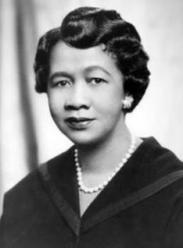
1912 – Dorothy Height born, African American civil rights and women’s rights activist; president of the National Council of Negro Women (1957-1997); awarded the Presidential Medal of Freedom in 1994, and a Congressional Gold Medal in 2004
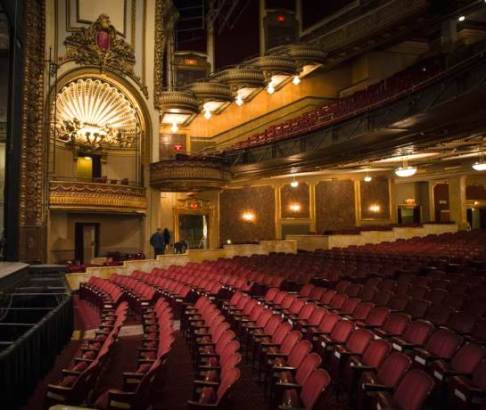
1913 – The Palace Theatre opens in New York City, the ‘home of vaudeville’
1919 – Lawrence Ferlinghetti born, American poet, liberal activist and co-founder of San Francisco’s City Lights Booksellers and Publishers, a gathering place for the city’s literati, and their ‘Pocket Poet’ series introduced poets like Allen Ginsberg, Kenneth Patchen and Gregory Corso

1920 – Mary Stolz born, American author, primarily of books for children and young adults; 1962 and 1966 Newbery Honors for Belling the Tiger and The Noonday Friends

1921 – The 1921 Women’s Olympiad begins in Monte Carlo, the first international women’s sports event. Since women were being excluded from international sports competitions, Alice Milliat of France founded the Federation Feminine Sportive de France in 1917. She went on to organize the 1921 games; five nations took part – France, Great Britain, Italy, Norway and Switzerland, competing in ten track and field events, and several other sports. The IOC objected to FSFI’s use of the word ‘Olympiad’ in the title of their championships. FSFI agreed to drop the word in exchange for the IOC holding ten events for women in the 1928 Olympic Games, but the IOC only included five women’s events in the 1928 games

1922 – Onna White born, dancer and choreographer, nominated for 8 Tony Awards, and recipient of a rare Academy Honorary Award for her choreography in the 1968 film version of the musical Oliver!
1926 – Dario Fo born, Italian playwright-director-designer, left-wing activist; Mistero Buffo; won the 1997 Nobel Prize in Literature
1927 – Nanking Incident: Foreign warships bombard Nanjing, China, in defense of the foreign citizens within the city
1934 – United States Congress passes the Tydings–McDuffie Act, which grants the Philippines the right to become a self-governing commonwealth
1935 – Carol Kaye born, American bass player, one of the most prolific bass guitarists in history with an estimated 10,000 recording sessions
1946 – The British Cabinet Mission arrives in India to discuss plans for the transfer of power from the British Raj to Indian leadership
1947 – Chris O. Gregoire born, American lawyer and Democratic politician; second woman Governor of Washington state (2005-2013); Washington State Attorney General (1993-2005); cancer survivor; advocate for healthcare, biomedical research and life sciences

1949 – Tabitha King born, American sci-fi/fantasy/horror author and literacy advocate
1953 – Anita L. Allen born, African American Professor of Law and Vice Provost for Faculty at the University of Pennsylvania Law School; senior fellow in the former bioethics department of UP’s Perelman School of Medicine; collaborating faculty member in Africana studies and women’s studies; appointed in 2010 to the Presidential Commission for the Study of Bioethical Issues

1955 – The Tennessee Williams play, Cat on a Hot Tin Roof opens on Broadway; it will win the 1955 Pulitzer Prize for Drama

1958 – Rock ‘n’ roll idol Elvis Presley is drafted in the U.S. Army
1959 – The Party of the African Federation is launched by Léopold Sédar Senghor and Modibo Keïta
1965 – NASA spacecraft Ranger 9, equipped to convert its signals into a form suitable for showing on domestic television, brings images of the Moon into ordinary homes before crash landing.
1970 – Sharon Corr born, Irish singer-songwriter-musician, co-founder with her siblings of The Corrs
1976 – In Argentina, the armed forces overthrow the constitutional government of President Isabel Perón and start a 7-year dictatorial period self-styled the National Reorganization Process. Since 2006, a public holiday known as Day of Remembrance for Truth and Justice is held on this day
1980 – El Salvador: Archbishop Óscar Romero of San Salvador is murdered while celebrating Mass, by a assassin who was almost certainly under orders from pro-government death squad leader Roberto D’Aubuisson, after Romero had again publicly denounced human rights violations; Romero was an outspoken advocate for the poor and marginalized, speaking out against social injustice, poverty, assassination and torture (see also entry for 2011)

1989 – One of the worst oil spills in the U.S. when the supertanker Exxon Valdez runs aground in Alaska’s Prince William Sound and leaks 11 million gallons of crude
1993 – Discovery of Comet Shoemaker–Levy 9
1999 – Kosovo War: NATO commences aerial bombardment against Yugoslavia, marking the first time NATO has attacked a sovereign country
2002 – Halle Berry becomes the first African-American woman to win a Best Actress Oscar, for Monster’s Ball

2003 – The Arab League votes 21–1 in favor of a resolution demanding the immediate and unconditional removal of U.S. and British soldiers from Iraq
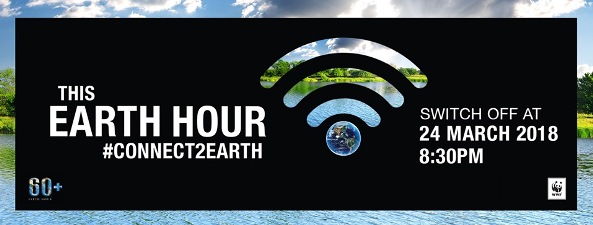
2007 – The World Wildlife Federation Australia launches a national campaign to raise awareness of human-caused climate change, asking that lights all over the nation be turned off for one “earth hour” – the following year, the campaign is sponsored by WWF International, with over 400 cities participating in 35 countries; this year Earth Hour will be from 8:30 pm to 9:30 pm, participant’s local time, on March 24, and almost every country on earth will be turning off at least some lights
2008 – Bhutan officially becomes a democracy, with its first-ever general election
2011 – The first International Day for the Right to the Truth Concerning Gross Human Rights Violations and for Dignity of Victims * designated in 2010 by the UN General Assembly, which chose March 24 to honor Archbishop Óscar Romero of El Salvador, shot to death on March 24, after denouncing human rights violations, by a pro-government death squad assassin (see also entry for 1980)
2015 – Red Nose Day * is launched by Comic Relief Inc., a telethon to raise money to improve the lives of children, this year focusing on ending child poverty; so far, Red Nose has raised over $100 Million globally to help over 8.3 children

_________________________________________

 Nicole Plyler Fisk
 Gene Howington
 FFS Guest Blogger
 Joy of Fishes
 Chuck Stanley
 shortfinals
 Terry Welshans
 ann li-summers
 wordcloud9


 Flowers For Socrates
We were all already participating in Earth Hour, but now that I know, I have decide to celebrate the Chocolate Covered Raisins Day too!!🌸🌸
Chocolate should always be celebrated!
I think Red Nose Day helped WAY more than 8.3 children.
It reminds me of my parents having a continual argument about overpopulation. My father used the statistic that American families were having 2.3 children and somehow he managed to make this support his argument that families who had three children were actually the problem. My mother argued that a family with six children was a problem and my father disagreed. So my mother said, “So if a family has three children the way for them to solve the problem is to have three more!?” My only take on the statistic was, “What’s a point-three child?”
There were about half a dozen different figures on how many children helped and how much money has been raised by Red Nose – I picked the next-to-lowest figure I found for children helped, and said “over” that figure, so it’s not incorrect, it’s just a conservative estimate. Probably some confusion since there are different Red Nose groups in several countries, making getting a combined total a little tougher.
As for the overpopulation issue, having more than two children means the parents aren’t just “replacing” themselves, they are adding more people.