Good Morning!

_______________________________
“Choices are the hinges of destiny.”
– Pythagoras
________________
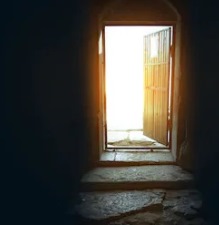
“The door might not be opened to a woman again
for a long, long time, and I had a kind of duty to
other women to walk in and sit down on the chair
that was offered, and so establish the right of
others long since and far distant in geography
to sit in the high seats.”
– Frances Perkins,
U.S. Secretary of Labor
(1933-1945)
________________
“May your choices reflect
your hopes, not your fears.”
– Nelson Mandela
____________________________
Thirteen poets born in
September and October.
Some long dead, some
still young, but all speak
of choice and challenge,
whether past or present
____________________________
September 29
____________________________
1547 – Miguel de Cervantes born in Alcalá de Henares, northeast of Madrid, Crown of Castile; widely regarded as the greatest writer in the Spanish language, and his most famous work, Don Quixote, is considered the first great modern novel because of its insights into the feelings and motivations of its characters. He also wrote short stories, poetry, plays, and other novels. He was a soldier in the 1571 Battle of Lepanto, and his left hand became unusable when he was wounded multiple times. In 1575, Cervantes was aboard a ship bound for Naples when it was captured by Barbary pirates. He was held prisoner until 1580, when his ransom was finally raised. In 1587, he was appointed as Royal Commissioner of supplies for the Invincible Army, and then became a tax collector in 1592. He was imprisoned more than once, accused of “irregularities.” Cervantes died at age 68 in April 1616, of symptoms that matched diabetes, which untreatable until the 1920s.
Don Belianís of Greece to Don Quixote of
La Mancha
by Miguel de Cervantes
I broke, I cut, I dented, and I said and I did
more than in the knight-errant orb;
I was right-handed, I was brave and arrogant,
I avenged a thousand wrongs, I undid a hundred thousand.
Feats I gave fame to eternalize;
I was a restrained and gifted lover;
everything giant was dwarf for me,
and to duel at whatever point I satisfied.
I had Fortune prostrate at my feet
and brought my sanity from the crest
to the bald occasion to the estricote.
But, although on the horn of the moon
my happiness was always exalted,
I envy your prowess, oh great Quixote!
– translator not credited
______________________________
1937 – Tom McKeown born in Evanston, Illinois; American poet, known for the surrealist edge in his work, and educator. After attending Northwestern and the University of Michigan, he began teaching at Alpena Community College on Lake Huron’s Thunder Bay, then at Wisconsin State University. He first published his poems in the 1960s, and later served as poet-in-residence at Stephens College in Missouri. He earned an MFA at Vermont College, and taught English and creative writing at several different schools until the 1990s, when he began teaching poetry tutorials for correspondence schools. His poem cycle, Circle of the Eye, with a score composed by Harold Blumenfeld, was performed at Carnegie Hall in the late 1970s. His poetry collections include: The Luminous Revolver; Driving to New Mexico; Three Hundred Tigers; and The Oceans in the Sleepwalker’s Hands.
Woman with Finger
by Tom McKeown
If you
have seen her,
then you know
that birds fly out
of her mouth
and light sleeps
in her hair.
Her finger
keeps making
circles
within circles,
movements
I cannot follow.
I image I see
her finger
tracing the night sky.
She has told me
that the night sky
is her invention
and her finger
a line in my poem.
“Woman with Finger,” © 1968 by Tom McKeown, appeared in
New Mexico Quarterly, Volume 38/Issue 4
____________________________
September 30
____________________________
1207 – Rumi born in Balkh in what is now Afghanistan as Jalāl ad-Dīn Muhammad Rūmī , on September 30, 1207; Persian poet, Islamic scholar, and Sufi mystic. His works have influenced the literary traditions in Persian, Turkish, Chagatai, Urdu and Pashto, and have been widely translated into many languages.
untitled
by Rumi
When someone mentions the gracefulness
of the nightsky, climb up on the roof
and dance and say,
Like this.
When someone quotes the old poetic image
about clouds gradually uncovering the moon,
slowly loosen knot by knot the strings
of your robe.
Like this.
– translator not credited
______________________________
1927 – W.S. Merwin born in New York City as William Stanley Merwin; American poet, prose author, memoirist, and translator. In the 1980s and 1990s, he became interested in Buddhist philosophy and deep ecology. Residing in a rural part of Maui, Hawaii, he wrote prolifically and was dedicated to the restoration of the island’s rainforests. He won the Pulitzer Prize for Poetry twice, in 1971 and 2009, and the National Book Award for Poetry in 2005. He served as U.S. Poet Laureate (2010-2011). Among his more than 50 poetry collections are: The Moon Before Morning; Migration; The Vixen; The River Sound; Unchopping a Tree; and Opening the Hand.
Blueberries After Dark
by W. S. Merwin
So this is the way the night tastes
one at a time
not early or late
my mother told me
that I was not afraid of the dark
and when I looked it was true
how did she know
so long ago
with her father dead
almost before she could remember
and her mother following him
not long after
and then her grandmother
who had brought her up
and a little later
her only brother
and then her firstborn
gone as soon
as he was born
she knew
“Blueberries After Dark” from The Shadow of Sirius, © 2008 by W.S. Merwin –
Copper Canyon Press
____________________________
October 1
____________________________
1885 – Louis Untermeyer born in New York City to a German-Jewish jewelry manufacturer; prolific American poet, anthologist, critic, short story writer, and editor. He published his poetry collection First Love in 1911, followed by The Challenge in 1914. He wrote for Leftist magazines like The Masses and The Liberator, and in 1916, co-founded The Seven Arts, a poetry magazine that introduced many new poets, including Robert Frost, who became Untermeyer’s long-term friend and correspondent. In the 1930s, he was a member of the League of American Writers, along with Lillian Hellman, Dashiell Hammett, and Arthur Miller. In 1950, he was a regular panelist on the TV show What’s My Line? when he came under the scrutiny of the House Committee on Un-American Activities, and was blacklisted by the television industry. In 1956 the Poetry Society of America awarded Untermeyer a Gold Medal. In the 1960s, he co-wrote several children’s books with his wife Bryna Ivens Untermeyer. He served as the 14th Consultant in Poetry to the Library of Congress (1961-1963). Untermyer died at age 92 in December 1977. His poetry collections include These Times; The New Adam; Burning Bush; and A Friend Indeed.
Questions At Night
by Louis Untermeyer
Why
Is the sky?
What starts the thunder overhead?
Who makes the crashing noise?
Are the angels falling out of bed?
Are they breaking all their toys?
Why does the sun go down so soon?
Why do the night-clouds crawl
Hungrily up to the new-laid moon
And swallow it, shell and all?
If there’s a Bear among the stars,
As all the people say,
Won’t he jump over those Pasture-bars
And drink up the Milky Way?
Does every star that happens to fall
Turn into a fire-fly?
Can’t it ever get back to Heaven at all?
And why
Is the sky?
“Questions at Night” from Long Feud: Selected Poems, © 1962 by Louis Untermeyer – Harcourt
______________________________
1961 – Deborah A. Miranda born in Los Angeles; American non-fiction writer, essayist, and poet. She is a member of the Ohlone-Costanoan Esselen Nation of Northern California. When she was three, her father went to prison, and her mother moved the family to Washington state. Miranda earned her MA and Ph.D. in English from the University of Washington. She became Thomas H. Broadhus professor of English at Washington and Lee University in Lexington, Virginia, where she taught creative writing, with a research interest in Native American culture. Her poetry collections include Raised by Humans; Altar for Broken Things; Indian Cartography; and The Zen of La Llorona.
Stories I Tell My Daughter
by Deborah Miranda
1.
Once when I was eight we came home in the dark
up our winding dirt road through a tunnel
of thick spring leaves, and our headlights
turned maple and salal into a green
glowing vein leading us sleepily to our beds.
Suddenly the headlights caught an owl,
wingspan as wide as the windshield,
every creamy feather etched in perfection,
round eyes huge and yellow
with pupils black enough
to swallow me up. His curved beak
opened in surprise
at being face to face
with this steel creature whose own eyes
shown unblinking and wild.
The owl
didn’t cry out but I did,
lunging forward into the dash,
hands beating against what was invisible
between us. I shouted, No!
Don’t―The owl spread every pinion,
drummed hard against the skin of air
between life and death,
lifted backwards―up―over
and we drove on home, giddy with fear.
All summer I lay awake on cool sheets,
window open,
waiting for a low urgent call.
“Stories I Tell My Daughter – 1” from Indian Cartography, © 1998 by Deborah Miranda – Greenfield Review Press
______________________________
1975 – Chelsea Rathburn born in Jacksonville, Florida, but raised in Miami; American poet and nonfiction writer. She has an MFA in creative writing from the University of Arkansas, and is director of the creative writing program at Young Harris College in Georgia. In 2019, she was named Poet Laureate of the state of Georgia. Her poetry collections include Unused Lines; The Shifting Line, which won the 2005 Richard Wilbur Award; A Raft of Grief; and Still Life with Mother and Knife, which won the 2020 Eric Hofer Award.
The Corinthian Women
by Chelsea Rathburn
“Shall I go in? Shall I go in?
We should stop the murder of the children.”
—The Chorus, Euripides’ Medea
Say what you like: that we were wretched, weak,
too quick to pity, that we envied her powers,
that the monstrous guilt as much as hers was ours
because we knew and knowing did not speak.
Of course you think you could have spared the child
squirming beneath the blade, destroyed the poison,
somehow suppressed her madness and her reason.
Call us barbaric all, feminine and wild.
Say we’d gone in, say we had stopped the knife,
(don’t you think that we were desperate for that choice?)
she’d still have had her potions and her fury;
she’d still have found the means to wreck her life.
Our role was fixed: to flank the gates and worry,
to speak behind our masks in a single voice.
“The Corinthian Women” from Still Life with Mother and Knife, © 2018 by Chelsea Rathburn – Louisiana State University Press
____________________________
October 2
____________________________
1941 – Diana Hendry born, English poet, children’s author, and short story writer; won the 1991 Whitbread Award for best children’s book for Harvey Angell. Her collections of poetry for adults include Making Blue, Borderers, and Late Love: and Other Whodunnits.
Watching Telly With You
by Diana Hendry
We could go to Paris of course
but not so often. And it might not be quite
as cosy as the sofa, the fire, our slippers,
the zapper. Sometimes mid-morning
I think about it, hankering a little like
the lovelorn do, for that evening lull,
front door locked, feet up, snugged up,
loved up and watching telly with you.
“Watching Telly With You” from Second Wind,© 2015 by Diana Hendry –
Saltire Society
______________________________
1957 – Assotto Saint born as Yves Francois Lubin in Haiti, but moved to New York in 1970; American poet, essayist, lyricist, playwright, performer, and AIDS activist. He danced with the Martha Graham Dance Company (1973-1980) until an injury ended his dance career. Co-founder of the Metamorphisis Theatre, he became a U.S. citizen in 1986. His poetry collections include Stations; Spells of a Voodoo Doll; and Sacred Spells: Collected Works, published posthumously. Assotto Saint died of AIDS at age 36 in June 1994.
The Geography of Poetry
by Assotto Saint
For Ntozake Shange
ntozake shange
i looked you up
among the poets at barnes & noble
but i didn’t find you
walt was there amidst leaves of grass
anne gazed down
her glazed eyes dreamt of rowing mercy
erica posed in her latest erotica
even rod took much space
i searched among ghosts
& those alive
still
i couldn’t find you
i asked the clerk
if he had kept you tied down in boxes
or does he use your books as dart boards
he smirked then shouted “she’s in the black section
in the back”
even literature has its ghettos
stacked amongst langston, nikki, & countee
maya who looked mad
the blues had her bad
zake tell me
did you demand to be segregated
“does color modify poetry”
i asked the manager
he patted me on my head
whispered
“it’s always been this way”
“The Geography of Poetry” from Sacred Spells: Collected Works by Assotto Saint, © 2023 by Assotto Saint – Nightboat Books
____________________________
October 3
____________________________
1897 – Ruth Muskrat Bronson born on the Delaware Nation Reservation in what was then Indian Territory in the Midwest; first Guidance and Placement Officer (1931-1943) of the Bureau of Indian Affairs, helping Indian students get loans and scholarships, and to find jobs after graduation. As executive secretary of the National Congress of American Indians, she helped force authorities to honor treaties. After her work for the BIA in Washington DC, she became a health education specialist for the Indian Health Service. She wrote books and articles, including, Indians are People Too; The Church in Indian Life; and Shall We Repeat Indian History in Alaska? Her poems mostly appeared in magazines and anthologies.
Sonnets from the Cherokee (I)
by Ruth Muskrat Bronson
My heart is like an opal, flashing fire
And flaming gleams of pointed light
At thy approach; or lying cold and white
When thou art gone; robbed of a dream’s desire
Is left moon-white and dull; no darting flame
Or sapphire gleam to mark a sweet suspense.
But only still, benumbed indifference
Unwaked at thy soft whisper of my name.
Come now, I tire of waiting to know love;
Teach me to scorn indifference white and dim
For I would drain fate’s cup of joy or strife;
Would play to the lost chord the vibrant hymn
That passion sings; my heart lifted above
Dull apathy; pulsating; knowing Life.
____________________________
October 4
____________________________
1956 – Lesley Glaister born in Wellingborough, Northamptonshire, England; British novelist, poet, and playwright; best known for her novels: Honour Thy Father, which won a 1991 Somerset Maughan Award; Now You See Me; Little Egypt; and Blasted Things; as well as her play, Bird Calls; and her poetry collection, Visiting the Animal. She is a Fellow of the Royal Society of Literature.
Twenty-eight Weeks
by Leslie Glaister
We nearly missed her.
This little storm of life,
could have blown by
before we weathered her.
But here she is: sturdy,
definite, pointing her finger
for this and this and more
and more and more.
“Twenty-eight Weeks” appears in the Scottish Poetry Library – https://www.scottishpoetrylibrary.org.uk/poet/lesley-glaister/
____________________________
October 5
____________________________
1900 – Bing Xin born as Xie Wanying, prolific Chinese poet, novelist, translator, and a pioneer in children’s literature in modern China. Her pen name Bing Xin literally translates as “ice heart,” meaning a morally pure heart. In 1919, while she was a university student, the May 4th Movement had a profound impact on her. In 1919, she published her first work under her pen name, then in 1923, she published two different poetry collections, A Maze of Stars and Spring Water, before going to the U.S. to study literature and library research for three years. Her letters about her travels were later published as Letters to My Little Readers. Upon her return, she taught at several colleges and universities in China, and at Tokyo University. The Photograph is an English language translation of her novel, about an American music teacher at a missionary school who adopts an 8-year-old Chinese girl. Her many poetry collections include: Two Families; Loneliness; Leisure; Superhuman; and Ode to Sakura. She died at age 98 in February 1999.
Spring Water: 1
by Bing Xin
Water in spring,
It is another year,
And you are still running after the breeze.
May I have a look at
My reflection again?
Water replies gently with thanks:
“My friend,
I have never kept a reflection,
Not even yours.”
— translator not credited
“1” from A Maze of Stars and Spring Water, © 2014 by Bing Xin – Simon & Schuster
______________________________
1950 – Edward Hirsch born in Chicago; American poet, critic, anthologist; essayist, “Poet’s Choice” columnist for the Washington Post (2002-2005), author of How to Read a Poem and Fall in Love with Poetry. He taught creative writing at the University of Houston (1985-2002). His many poetry collections include: For the Sleep Walkers; Wild Gratitude; Earthly Measures; The Night Parade; The Living Fire; and Stranger By Night.
A Partial History Of My Stupidity
by Edward Hirsch
Traffic was heavy coming off the bridge,
and I took the road to the right, the wrong one,
and got stuck in the car for hours.
Most nights I rushed out into the evening
without paying attention to the trees,
whose names I didn’t know,
or the birds, which flew heedlessly on.
I couldn’t relinquish my desires
or accept them, and so I strolled along
like a tiger that wanted to spring
but was still afraid of the wildness within.
The iron bars seemed invisible to others,
but I carried a cage around inside me.
I cared too much what other people thought
and made remarks I shouldn’t have made.
I was silent when I should have spoken.
Forgive me, philosophers,
I read the Stoics but never understood them.
I felt that I was living the wrong life,
spiritually speaking,
while halfway around the world
thousands of people were being slaughtered,
some of them by my countrymen.
So I walked on — distracted, lost in thought —
and forgot to attend to those who suffered
far away, nearby.
Forgive me, faith, for never having any.
I did not believe in God,
who eluded me.
“A Partial History Of My Stupidity” from For the Sleepwalkers, © 1981 by Edward Hirsch – Alfred A. Knopf
______________________________

 Nicole Plyler Fisk
 Gene Howington
 FFS Guest Blogger
 Joy of Fishes
 Chuck Stanley
 shortfinals
 Terry Welshans
 ann li-summers
 wordcloud9


 Flowers For Socrates