Good Morning!

__________________________________________
__________________________________________

________________________________________
________________________

_________________________________________

__________________________________________

__________________________________________
_______________________

__________________________________________
__________________

__________________________________________
__________________________________________
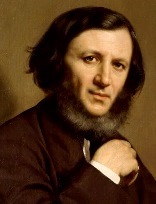
Robert Browning born on May 7, 1812 in Camberwell, a middle-class suburb of London. He was the only son of Robert Browning, a clerk in the Bank of England, and a devoutly religious German-Scotch mother, Sarah Anna Wiedemann Browning, who loved music. Browning’s father had amassed a personal library of some 6,000 volumes, many of them collections of arcane lore and historical anecdotes that the poet plundered for poetic material, including the source of “The Pied Piper.”
Browning has come to be regarded as a major Victorian poet, and his approach to dramatic monologue has influenced countless poets for almost a century. However, he is at least as famous for falling in love with Elizabeth Barrett, who began writing poetry at age 11, but by age 15, was suffering from intense head and spinal pain, and remained in frail health for the rest of her life. They met in 1845. She was six years his senior, and living as a semi-invalid in her father’s house. They wrote to each other frequently, and the romance led to their marriage in 1846 and a journey to Italy for Elizabeth’s health. Her domineering father disapproved of the marriage and disinherited Elizabeth.
After a promising start, Browning’s reputation as a poet suffered under harsh criticism, and interest in his work faded as the Brownings remained in Italy. It wasn’t until he returned to England after Elizabeth’s death in 1861 that his work began to be re-evaluated.
“Home-Thoughts, from Abroad” was written during the years they spent in Italy. To read this poem by Robert Browning click:

 Nicole Plyler Fisk
 Gene Howington
 FFS Guest Blogger
 Joy of Fishes
 Chuck Stanley
 shortfinals
 Terry Welshans
 ann li-summers
 wordcloud9


 Flowers For Socrates