The Boston Terrier (Canis familiaris bostenensis) was designated the Official State Dog of Massachusetts in 1979.
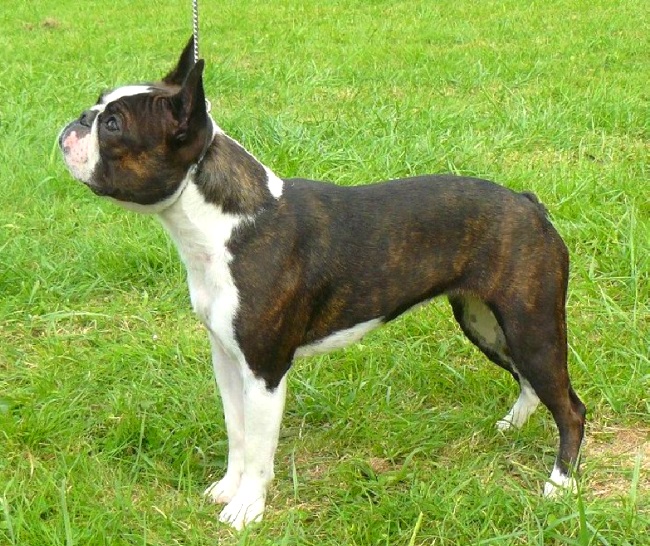
The Boston Terrier is nicknamed the “American Gentleman” because of its dark body color with white markings which make it look like a formally dressed gentleman, and its friendly disposition. As the name implies, these dogs were developed in Boston.
Sometime around 1870, Robert C. Hooper bought a mixed breed dog named Judge, a mix of Bull and Terrier breeds. Renamed Hooper’s Judge, he is cited by the AKC as the ancestor of almost all true modern Boston Terriers.
Offspring were bred with one or more French Bulldogs, resulting in smaller dogs than Hooper’s Judge, whose weight was somewhere between 27 and 29 pounds. The modern-day Bostons usually weigh between 10 and 25 pounds.

By 1889 the breed had gained enough popularity in Boston that fanciers formed the American Bull Terrier Club, but the dogs were popularly called “roundheads.” The club soon changed its name to the Boston Terrier Club, and applied for American Kennel Club recognition in 1891.
It was admitted to membership in the American Kennel Club in 1893, making it the first United States breed to be recognized. The Boston Terrier is also the first non-sporting dog bred in the U.S.
These devoted companion dogs are considered highly intelligent and easily trained. Their normal life span is between 11 and 15 years. They are people-lovers, energetic, and “highly entertaining,” according to their enthusiastic supporters.

Their ancestors were bred for fighting, bull-baiting and rat-catching, so they needed short upturned snouts to breathe while continuing to bite their opponents, but this characteristic causes problems for Boston Terriers today. They overheat easily when racing around in play, make snorting noises when awake, and snore while sleeping. They are also prone to respiratory issues. Their short flat coat, while easy to groom, provides little insulation, so they are sensitive to hot and cold temperatures.
Boston Terriers can do well in agility competitions and obedience training. Their outgoing personality and happiness at meeting new people also makes them wonderful therapy dogs.

Sources
- American Kennel Club — http://www.akc.org/dog-breeds/boston-terrier/
- State Symbols — http://www.statesymbolsusa.org/symbol-official-item/massachusetts/state-dog-cat-state-mammal/boston-terrier
- Boston Terrier Club of America — http://www.bostonterrierclubofamerica.org/
- Animal Planet — http://www.animalplanet.com/breed-selector/dog-breeds/non-sporting/boston-terrier.html

 Nicole Plyler Fisk
 Gene Howington
 FFS Guest Blogger
 Joy of Fishes
 Chuck Stanley
 shortfinals
 Terry Welshans
 ann li-summers
 wordcloud9


 Flowers For Socrates