May 21st is

American Red Cross Founder’s Day *
National Memo Day
Strawberries and Cream Day

National Waitstaff Day
Take Your Parent(s) to the Playground Day *
World Day for Cultural Diversity for Dialogue and Development
________________________________________________________________
MORE! Mary Anning, Glenn Curtiss and Andrei Sakharov, click
________________________________________________________________
WORLD FESTIVALS AND NATIONAL HOLIDAYS
Cameroon – Sheep Festival
Chile – Navy Day
Kabardino-Balkaria –
Circassian Day of Mourning *
Montenegro – Independence Day
Saint Helena – Saint Helena Day
Turkey – Cappadocia:
Cappadox Arts Festival
United States –
San Francisco CA: 105th Bay to Breakers
________________________________________________________________
On This Day in HISTORY
1260 – Hao Jing, envoy of Mongol leader Kublai Khan, is imprisoned by order of the high Chancellor of China, Jia Sidao, at the Song Dynasty court of Emperor Lizong while attempting to negotiate with the Song
1554 – Queen Mary I grants a royal charter to Derby School, as a grammar school for boys in Derby, England; it will last until 1989

Queen Mary I, by Hans Eworth
1758 – Ten-year-old Mary Campbell is abducted by a band of Lenape, also known as the Delaware, in Pennsylvania. Increased numbers of British military troops in Pennsylvania and Ohio because of hostilities between Native Americans and settlers eventually led to a meeting of several tribes with Colonel Henry Bouquet in which he demanded return of all known captives, a list of 60 names, including Mary Campbell. She was returned to her family in 1764.
1780 – Elizabeth Fry born, English philanthropist, reformer and Quaker, called “angel of prisons” for her campaigns to improve prison conditions after she made a visit to Newgate Prisons in 1813, and found overcrowded conditions and women who had not even been tried; she later funded a school for the children living in the prisons with their prisoner mothers, and founded the ‘Association for the Reformation of the Female Prisoners in Newgate’ which provided materials for the women to learn sewing and knitting in order to earn money after their release

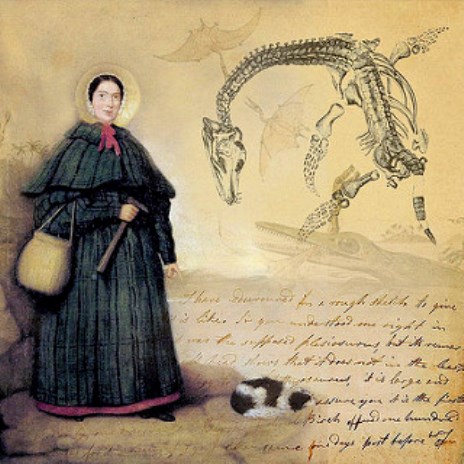
1799 – Mary Anning born, British fossil collector and paleontologist, made a number of important finds; although widely known for her fossil studies, she wasn’t permitted to join the Geological Society of London because she was a woman, and did not always receive credit for her work
1819 – The first bicycles in the U.S. are seen in New York City, nicknamed “swift walkers” which are imported from London
1832 – The first Democratic Convention is held in Baltimore MD
1832 – Elizabeth Storrs Mead born, American academic, Mount Holyoke College President
1840 – Captain William Hobson proclaims British sovereignty over New Zealand; the North Island by treaty and the South Island by ‘discovery’
1846 – The first steamship arrives in Hawaii
1851 – Slavery is abolished in Columbia, South America
1856 – Grace Hoadley Dodge born, American philanthropist and organizer, founder of the first Working Girls Society in New York City, the Association of Working Girls’ Societies, and the Young Women’s Christian Association
1860 – Willem Einthoven born, Dutch physiologist; developer of the electrocardiograph; 1924 Nobel Prize
1864 – Circassian Day of Mourning * commemorates the end of the Russian-Circassian War, when many Circassians are forced into exile
1864 – Princess Stéphanie of Belgium born, Crown Princess of Austria, and inventor;
she took out patents on a combination chafing dish and spirit lamp
1877 – Romania declares itself independent from the Ottoman Empire following its Senate’s adoption of Mihail Kogălniceanu’s Declaration of Independence
1878 – Glenn Curtiss born, American aviation pioneer
1881 – founds the American Red Cross, in Washington DC – celebrated as American Red Cross Founder’s Day *
1892 – Ruggero Leoncavallo’s opera I Pagliacci premieres in Milan
1901 – Baroness Suzanne Lilar born, Belgian journalist, author and playwright, member of the Royal Academy of French Language and Literature
1904 – Fats Waller born, American pianist and composer
1914 – The Greyhound Bus Company begins in Minnesota
1918 – US House of Representatives passes amendment allowing women to vote by 274 to 136. Jeannette Rankin, the first woman to serve in Congress, spoke: “How shall we answer their challenge, gentlemen: how shall we explain to them the meaning of democracy if the same Congress that voted for war to make the world safe for democracy refuses to give this small measure of democracy to the women of our country?” The amendment fails to pass in the Senate, and has to be introduced all over again 1919
1921 – Andrei Sakharov born, Soviet scientist and dissident, 1975 Nobel Peace Prize

1922 – The Pulitzer Prize for Drama awarded to Eugene O’Neill for Anna Christie
1925 – Norwegian explorer Roald Amundsun leaves Spitsbergen with two seaplanes for the North Pole

Roald Amundsun in 1925
1927 – Aviator Charles Lindbergh, in the Spirit of St Louis, lands in Paris after the first solo air crossing of Atlantic
1929 – Sergei Prokoviev’s ballet Prodigal Son premieres in Paris
1944 – Mary Robinson, first woman President of Ireland (990-1997)
1959 – The musical Gypsy opens on Broadway
1966 –Mamas and the Papas album If You Can Believe Your Eyes and Ears is #1
1970 – Crosby, Stills, Nash and Young record “Ohio”
1979 – Former San Francisco City Supervisor Dan White is convicted of voluntary manslaughter for killing Mayor George Moscone and Supervisor Harvey Milk.
1980 – The Empire Strikes Back, the second Star Wars movie, is released
1985 – Marvin Gaye’s last album Dream of a Lifetime is released
1994 – Tim McGraw’s album Not a Moment Too Soon is #1
2001 – French Taubira law officially recognizes the Atlantic slave trade and slavery as crimes against humanity
2009 – Take Your Parent(s) to the Playground Day * is launched to encourage kids and their folks to get outdoors and have fun together
________________________________________________________________

 Nicole Plyler Fisk
 Gene Howington
 FFS Guest Blogger
 Joy of Fishes
 Chuck Stanley
 shortfinals
 Terry Welshans
 ann li-summers
 wordcloud9


 Flowers For Socrates
Glenn Curtiss and the Wright brothers had a running feud over their different approaches for controlling the roll axis of an airplane. The Wrights controlled rolling motion by warping the wings. As the story goes, they got the idea when one of them twisted a long slender box in which a bicycle part had come. The thin slender wings of their airplane lent themselves to warping, using cables and pulleys. Obviously, the idea worked. Glenn Curtiss realized that warping an entire wing was inefficient, and would not work for heavier aircraft. He thought a hinged panel near the wingtips would deflect the air and achieve the same result. This was the first aileron. It was effective, efficient, easier to construct, and did not require as much complex cable arrangement.
The Wrights sued, claiming that Curtiss had infringed their patent for controlling roll in flight. The legal battle went on for years. World War One broke out, and airplane designers around the world began to use Glenn Curtiss’ ailerons to control roll. The first flimsy stringbag airplanes used wing warping. As the war went on, military aircraft became faster, more strongly built, and heavier. Wing warping simply would not have worked. Ailerons did work on the tougher and heavier aircraft. Curtiss eventually prevailed, since he had invented a new device, even though it achieved the same end as the Wright’s wing warping.
The video represents the find of a lifetime for any aviation enthusiast. It is an original 1909 Curtiss Pusher. It was found as a collection of parts in an attic during an estate sale. The parts were factory original, never before used. It has been assembled, and was displayed last year at the EAA Airventure in Oshkosh, WI. In the video, the ailerons are the long flat panels midway between the top and bottom wings, extending just beyond the wingtips.
It was such a shame – the Wrights and Curtiss spent so much time and energy on their legal battles, they got left behind by the rest of the airplane industry – only their lawyers did well.