
August 18th is

Bad Poetry Day
Ice Cream Pie Day
Fajita Day *

Mail Order Catalog Day *
Pinot Noir Day
Serendipity Day *
_______________________________________________________________
MORE! Antonio Salieri, Rosalynn Carter and Vladimir Nabokov, click
________________________________________________________________
WORLD FESTIVALS AND NATIONAL HOLIDAYS
Japan – Tokyo and Osaka:
Summer Sonic Festival (til August 20)
Norway – Trondheim: Pstereo Festival
Russia – Saint Petersburg: Roof Music Fest
Scotland – Edinburgh: 70th annual Fringe
of the Edinburgh Festival celebration
Wales – Brecon Beacons: Green Man Festival
________________________________________________________________
On This Day in HISTORY
684 – Second Islamic Civil War – Battle of Marj Rahit: The combined forces supporting Umayyad Caliph Marwan I defeat the army of Abdallah ibn al-Zubayr of Mecca, self-proclaimed Caliph, strengthening Umayyad control of Syria
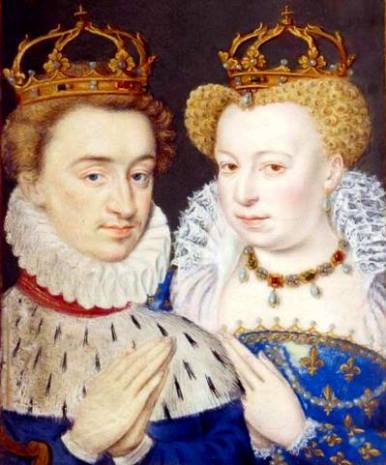
1572 – Protestant Henry IV, King of Navarre, and Margaret of Valois (daughter of Catherine de’ Medici and Henry II) marry at Notre Dame – a week later, thousands of Huguenots, who flocked to Paris for the wedding celebration, are murdered in the Saint Bartholomew’s Day massacre – King Henry escapes with the help of his wife after he promises to convert to Catholicism; he is kept at the French court until his escape in 1576, when he repudiates Catholicism and rejoins the Protestant forces
1612 – At Lancashire England Assizes, 8 of 9 accused ‘Pendle Witches’ found guilty
1735 – Boston’s Evening Post newspaper begins publication
1750 – Antonio Salieri born, Italian composer
1774 – Meriwether Lewis born, American explorer, co-leader of the Lewis and Clark Expedition, also known as the Corps of Discovery
1834 – Marshall Field born, American department store owner; benefactor of the University of Chicago and the Field Museum of Natural History, re-named for him
1849 – Benjamin Louis Godard born, French composer
1871 – Francis John McConnell born, American university president, Methodist bishop, and labor reformer; as chair of an interfaith commission of inquiry, influential in abolishing the 7-day workweek and 12 hour workday in the steel industry

1872 – Mail Order Catalog Day *- Aaron Montgomery Ward publishes his first mail order catalog – a single page with 163 items for sale
1885 – Gertrude “Nettie” Higgins Palmer born, Australian poet and essayist, one of Australia’s leading literary critics
1893 – Ragini Devi born, American specialist in classical and folk ethnographic dances, won acclaim from dance critics, author of Dance Dialects of India (1972) performed with her daughter and granddaughter
1894 – U.S. Bureau of Immigration established by Congress
1902 – Leona Baumgartner born, physician, first woman to be commissioner of New York City Department of Health (1954); advocate for public health education; head of the U.S. Agency for International Development (1962)
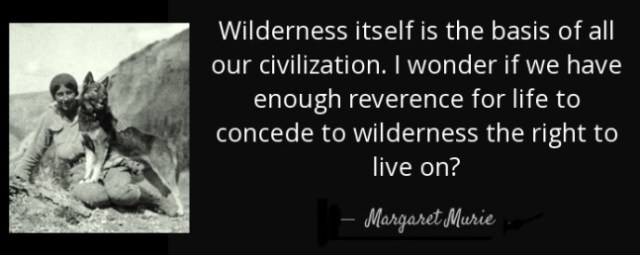
1902 – Margaret ‘Mardy’ Murie born, author and conservationist,”Mother of Wilderness,” worked for wilderness preservation, especially the National Arctic Wildlife Refuge; wrote Two in the Far North, and Wapiti Wilderness
1907 – Howard Swanson born, American composer
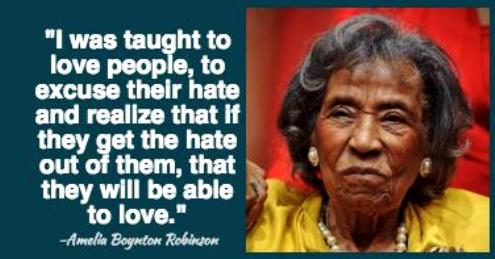
1911 – Amelia Boynton Robinson born, American suffragist, civil rights activist and playwright; American Civil Rights Movement leader; founding vice-president of the Schiller Institute; awarded the Martin Luther King, Jr. Freedom Medal
1914 – President Wilson issues “Proclamation of Neutrality” for U.S. at WWI start
1916 – Abraham Lincoln’s birthplace becomes a national shrine
1919 – The ‘Anti-Cigarette League of America’ forms in Chicago IL
1920 – U.S. Constitution’s 19th Amendment is ratified, giving women the right to vote. But it almost didn’t happen. Battle of the Roses – Yellow roses were worn by suffrage supporters, red roses by opponents. Tennessee became the 36th and deciding state to ratify the 19th Amendment, by a single vote, cast by 24-year-old Harry Burn who had been in the anti-ratification camp and was still wearing his red rose when he voted for passage, because he received a last-minute letter from his mother that morning. Phoebe Ensminger Burn, called “Miss Febb,” wrote, “Hurrah, and vote for suffrage! Don’t keep them in doubt. I notice some of the speeches against. They were bitter. I have been watching to see how you stood, but have not noticed anything yet.” She ended the missive with a rousing endorsement of the suffragist leader Carrie Chapman Catt, imploring her son to “be a good boy and help Mrs.Catt put the ‘rat’ in ratification.” He explained his sudden change of heart, “I know that a mother’s advice is always safest for her boy to follow, and my mother wanted me to vote for ratification.”

Harry Burn and his mother ‘Miss Febb’
1927 – Rosalynn Carter born, U.S. First Lady (1977-81), politically active while in White House, focused on mental health, senior citizens, and community voluntarism; co-founder with husband of the Carter Center; strong supporter of Habitat for Humanity
1937 – First FM radio station permit issued in Boston MA
1938 – FDR at the opening of Thousand Islands Bridge connecting U.S. and Canada
1940 – ‘The Hardest Day’ of WWII’s Battle of Britain: The British RAF has 29 casualties, and loses 56 aircraft, with another 52 damaged; the Luftwaffe has 129 casualties, loses 69 aircraft, and another 31 damaged
1954 – J Ernest Wilkins Sr., appointed as U.S. Assistant Secretary of Labor under Eisenhower, becomes the first African-American to attend a cabinet meeting as a member of a government department
1957 – Tan Dun born, Chinese composer, noted for the filmscore for Crouching Tiger, Hidden Dragon
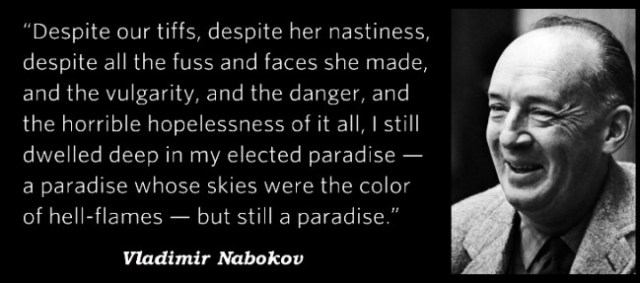
1958 – Vladimir Nabokov’s novel Lolita is published
1962 – Peter, Paul & Mary release “If I Had A Hammer”
1963 – James Meredith is first black man to graduate from University of Mississippi
1966 – First photographs of Earth taken from moon orbit sent back to Earth

1973 – “China Grove” is released by the Doobie Brothers
1977 – Anti-Apartheid activist Steven Biko arrested in South Africa – later dies from injuries while in custody
1982 – Japanese election laws are amended to allow proportional representation
1988 – The FDA approves Minoxidil to treat hair loss
1994 – The 15th British Commonwealth Games open in Victoria BC Canada
1997 – Beth Ann Hogan becomes first woman to attend Virginia Military Institute (VMI)
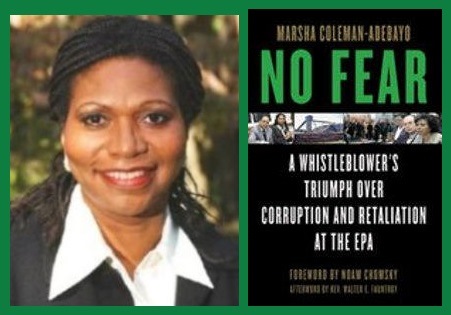
2000 – A Federal jury finds the US Environmental Protection Agency guilty of discrimination against Dr. Marsha Coleman-Adebayo; she was passed over for promotion after repeatedly reporting complaints that a U.S. company was mining toxic vanadium in South Africa; her example helped to pass “No FEAR,” the Notification of Federal Employees Anti-discrimination and Retaliation Act (2002)
2010 –First ‘Serendipity Day’ * is established to celebrate life’s happy surprises
2016 – The first Fajita Day is launched in honor of the sizzling Tex-Mex dish, evolved from a transplanted Catalan dish merged with Mexican cuisine
________________________________________________________________

 Nicole Plyler Fisk
 Gene Howington
 FFS Guest Blogger
 Joy of Fishes
 Chuck Stanley
 shortfinals
 Terry Welshans
 ann li-summers
 wordcloud9


 Flowers For Socrates
When Vladimir Nabokov was asked about his favorite character, he said, “Of course Lolita.” I believe that people who read him without full appreciation (including, unfortunately, Martin Amis) come up with the peculiar (to me) notion that he was a pedophile. I believe nothing could be farther from the truth. I believe he was a victim of incest (his Uncle Ruka) and that he wrote the character Lolita to help him out of the unfreedom that experience imposed on him. (I do believe, and the evidence clearly shows, that he was a philanderer, but not a predator, and his favorite targets for “affairs” were his young women students.)
His second-favorite character was Pnin. It was a bit harder for him to decide on who held second place, if I remember correctly.
I think Lolita and Pnin were both Volodya Nabokov.
I’ve always found Lolita really hard to read. There are age disparity relationships that work because the two people involved share some unusual characteristics, and there simply isn’t anyone else who is going to ‘get’ them – but obsession with a much younger person based on their youth and looks is just sad.
It was a great work of art. Astonishing, really. I could read Nabokov’s feelings of being trapped and manipulated, emotionally ignored, canceled. It is one of the three greatest novels I ever read. (Hundred Years of Solitude, The Wall, Lolita)