
June 5th is

Festival of Popular Delusions Day *
Hot Air Balloon Day *
National Ketchup Day
Veggie Burger Day
World Environment Day *
_________________________________________
MORE! Adam Smith, Orapin Chaiyakan and James Taylor, click
_________________________________________
WORLD FESTIVALS AND NATIONAL HOLIDAYS
Bermuda –
Dame Lois Browne-Evans Day *
Denmark & the Faroe Islands –
Grundlovsdag (Constitution Day *)
Equatorial Guinea –
President Mbasogo’s Birthday
Iran – 1963 Khordad Uprising Day
Suriname –
Hindustani Arrival 145th Anniversary
_________________________________________
On This Day in HISTORY
AD 70 – Titus, son and heir of Roman Emperor Vespasian, leads his Roman legions as they breach the middle wall of Jerusalem in the Siege of Jerusalem
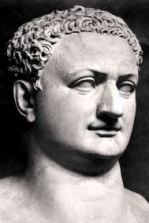
Titus Caesar Vespasianus
1646 – Elena Cornaro Piscopia born, Venetian mathematician, philosopher and linguist; one of the first women to receive an academic degree from a university, and the first woman in the world to earn a Ph.D. The illegitimate daughter of a nobleman and a peasant – her father later married her mother, but that did not change her status or that of her brothers born out of wedlock. When it was discovered that she was a child prodigy, she was given a classical education by tutors, becoming proficient in Latin, Greek, French and Spanish by age 7, and also learned Hebrew and Arabic, earning the title “Oraculum Septilingue” and went on to study mathematics, philosophy, theology and music, playing several instruments and composing music, and in her twenties, took up physics and astronomy. She rebuffed all her father’s attempts to marry her off, and took the habit of a Benedictine Oblate, but without taking the vows to become a nun. Felice Rotondi, her advisor in theology, petitioned the University of Padua to grant her the laurea (equivalent to a bachelor’s degree) in theology, but Gregorio Cardinal Barbarigo, the bishop of Padua, refused to allow it because she was a woman, but did allow her to work toward a degree in Philosophy, which was conferred on her in 1678, with great ceremony in Padua Cathedral, attended by most of the Venetian Senate, the University authorities and faculty, and guests invited from the Universities of Bologna, Perugia, Rome and Naples. The Lady Elena discoursed for an hour in classical Latin on the works of Aristotle. She then devoted herself to study and charitable works until her death from tuberculosis in 1684 at age 38

1660 – Sarah Churchill, Duchess of Marlborough born, wife of John Churchill, First Duke of Marlborough, is an influential figure in her own right, through her close friendship and support of Queen Anne before 1711, and later, her inheritance as a widow which made her one of the richest women in Europe
1718 – Thomas Chippendale born, highly influential English cabinet-maker; in 1754, published a book of his designs, The Gentleman and Cabinet Maker’s Director, much used by other cabinet makers, which made the Chippendale style famous
1723 – Adam Smith born, Scottish economist, philosopher and author; key figure of the Scottish Enlightenment; The Wealth of Nations, first modern work of economics

1783 – Hot Air Balloon Day *- The Montgolfier brothers send a pig, a duck, and a rooster up in a hot air balloon on a test flight, lasting 10 minutes and reaching several thousand feet in altitude

1819 – John Couch Adams born, English mathematician and astronomer; used mathematics to predict the existence and location of Neptune
1829 – The schooner HMS Pickle, under command of J.B.B. MacHardy, races to capture the fleeing Spanish slave ship Voladora, which had left Africa with 367 people to be sold into slavery; heavy fire is exchanged, beginning just before midnight. When the masts of the Voladora are brought down, the Spaniards surrender. The Pickle tows the Voladora into harbor at Cuba. The Havana Slave Trade Commission, a British Vice Admiralty court, condemns the Voladora for sale, and issues emancipation certificates for the 330 surviving captives, most of whom re-settle in British Caribbean colonies
1836 – Miriam Folline Squiers Leslie born, author, publisher and suffragist; after her husband Frank died, she took over his publishing business, then legally changed her name to Frank Leslie; she bequeathed most of her estate to Carrie Chapman Catt, to be used for the cause of women’s suffrage
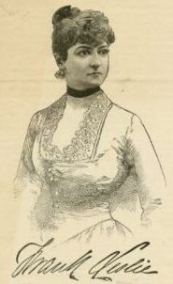
The new Frank Leslie
1849 – Constitution Day *- Denmark becomes a constitutional monarchy by the signing of a new constitution
1851 – Harriet Beecher Stowe’s anti-slavery serial, Uncle Tom’s Cabin, or Life Among the Lowly, starts a ten-month run in the National Era abolitionist newspaper
1862 – As the Treaty of Saigon is signed, ceding parts of southern Vietnam to France, the guerrilla leader Trương Định decides to defy Vietnamese Emperor Tự Đức and fight on against the Europeans
1868 – Johan Thorn Prikker born, Dutch artist who worked in Germany
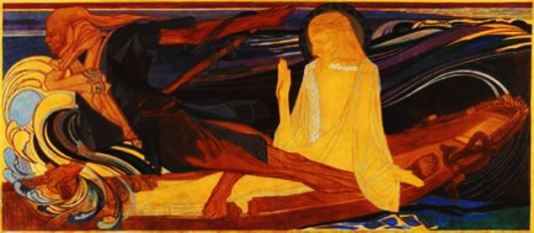
Julian’s ride across the river, by Johan Thorn Prikkr – 1906
1878 – Pancho Villa born, Mexican revolutionary general
1883 – John Maynard Keynes born, influential English economist; revolutionary theorist on causes of business cycles, economic effects of unemployment, and macroeconomics, based on aggregate demand (total demand for finished goods and services at any given time in a society); The Economic Consequences of the Peace

1883 – The first regularly scheduled Orient Express train leaves Paris
1884 – Ivy Compton-Burnett born, English novelist, author of over 20 dark and sometimes humorous books about families and domesticity, including Pastors and Masters, A House and Its Head, Daughters and Sons, Manservant and Maidservant
1887 – Ruth Fulton Benedict born, anthropologist and folklorist, President of the American Anthropological Association, member of the American Folklore Society. Wrote Patterns of Culture, The Chrysanthemum and the Sword and “The Races of Mankind,” a WWII pamphlet for the troops showing racism wasn’t grounded in scientific reality

1898 – Federico García Lorca born, major Spanish poet and radical playwright; he will be murdered by the Franquists, his books burned and banned in Franco’s Spain

1915 – Denmark amends its constitution to allow women to vote
1916 – Louis Brandeis is sworn in as a Justice of the U. S. Supreme Court
1916 – The Arab Revolt against the “impious” Ottoman Empire begins, trying to establish an independent unified Arab state from Aleppo in Syria to Aden in Yemen
1917 – WWI Conscription begins in the U.S. as “Army Registration Day”
1933 – U.S. Congress abrogates the U.S. gold standard by enacting a joint resolution nullifying the right of creditors to demand payment in gold
1934 – Bill Moyers born, American television reporter, investigative journalist, and political commentator; White House Press Secretary during the Johnson administration (1965-1967); host of Bill Moyers Journal on public television (1971-1981 and 2007-2010); with his wife Judith, produced several PBS documentary series, including The Secret Government: The Constitution in Crisis and In Search of the Constitution (both 1987) and Joseph Campbell and the Power of Myth and A World of Ideas (both 1988); in 1995, Moyers was inducted into the Television Hall of Fame and received the Walter Cronkite Award for Excellence in Journalism

1937 – Hélène Cixous born, French academic, feminist writer, poet and rhetorician; her article Le Rire de la Méduse (The Laugh of Medusa) in 1975 established her as an early theorist of poststructuralist feminism; she founded the centre of feminist studies at the Centre universitaire de Vincennes of the University of Paris, the first feminist studies program at a European university
1939 – Margaret Drabble born, Lady Holroyd, English novelist and biographer; The Millstone won the 1966 John Llewellyn Rhys Memorial Prize, and Jerusalem the Golden won the1967 James Tait Black Memorial Prize; also published biographies of Arnold Bennett and Angus Wilson, and critical studies of William Wordsworth and Thomas Hardy; outspoken critic of Britain’s involvement in the 2003 invasion of Iraq, and the policies of the Bush administration

1941 – Spalding Gray born, American actor and author, known for his autobiographical monologues, especially Swimming to Cambodia, Monster in a Box, and Gray’s Anatomy
1945 – The first Festival of Popular Delusions Day * was the day before D-Day, the last day the Nazi regime could have thought they might still win WWII
1947 – U.S. Secretary of State George Marshall calls for economic aid to war-torn Europe on a speech at Harvard University
1949 – Orapin Chaiyakan is elected as the first female member of Thailand’s Parliament
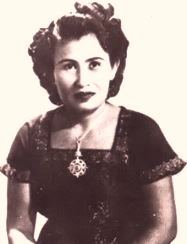
1949 – Dame Elizabeth Gloster born, British judge, the first woman appointed as a judge of the Commercial Court; serving as a Lady Justice of the Court of Appeal of England and Wales in 2013, and consequently appointed to the Privy Council ; Vice-President of the Civil Division since 2016
1951 – Suze Orman born, American financial advisor and columnist, author, television host and motivational speaker; published several books, including The Road to Wealth and The Laws of Money
1953 – Kathleen Kennedy born, American film producer, co-founder with Steven Spielberg and Frank Marshall of Amblin Entertainment; producer of E.T. the Extra-Terrestrial and Jurassic Park, two of the top ten highest-grossing films of the 1990s; president of Lucasfilms since 2012

Kathleen Kennedy at Cannes
1956 – Elvis Presley’s swiveling hips during a performance of “Hound Dog” on the Milton Berle Show scandalizes the audience
1963 – John Profumo, Britain’s Secretary of State for War, resigns in the midst of a sex scandal known as the “Profumo Affair”
1963 – Dame Lois Browne-Evans Day * – Browne-Evans is elected as a Member of the Colonial Parliament, the first black woman to be elected in Bermuda, during the first election in Bermuda in which non-property owners could vote; also the first woman in Bermuda called to the bar

1964 – Lisa Cholodenko born, American screenwriter and TV and film director; wrote and directed Laurel Canyon and The Kids Are All Right; won a Primetime Emmy for the 2014 miniseries Olive Kitteridge
1967 – Israeli forces launch a surprise attack against Egypt, beginning the Six Day War
1968 – Senator Robert F. Kennedy (D-NY), campaigning in California during the primaries against President Lyndon Johnson and Eugene McCarthy, is shot by a 24-year-old Palestinian angry at his support of Israel, and dies the next day
1971 – James Taylor’s “You’ve Got A Friend” is released
1973 – World Environment Day * is launched by the UN the year after the first major environmental conference is held in Stockholm, Sweden

1975 – The Suez Canal re-opens after it is declared 99% clear of mines set during the Yom Kippur War; an Egyptian blockade had closed it to shipping since the Six Day War in 1967
1981 – The Center for Disease Control (CDC) describes five cases of a rare form of pneumonia, a deadly immune deficiency disease which later became known as AIDS. By the year 2000, more than 40 million people worldwide are affected by it
2012 – Wisconsin Governor Scott Walker becomes the first governor to survive a recall election, winning by 53% – investigations into allegations of campaign irregularities are closed by the Wisconsin Supreme Court in 2015
2013 – The first article based on NSA documents leaked by the controversial Edward Snowden are published by the Guardian newspaper in the UK

_________________________________________

 Nicole Plyler Fisk
 Gene Howington
 FFS Guest Blogger
 Joy of Fishes
 Chuck Stanley
 shortfinals
 Terry Welshans
 ann li-summers
 wordcloud9


 Flowers For Socrates