
August 4th is
Chocolate Chip Cookie Day


Hooray for Kids Day
U.S. Coast Guard Day *
White Wine Day
Single Working Women’s Day *
_________________________________________
MORE! Satchmo, Helen Thomas and Barak Obama, click
_________________________________________
WORLD FESTIVALS AND NATIONAL HOLIDAYS
Andorra – La Vella Festival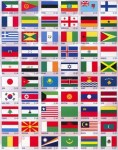
Barbados – Bridgetown:
Crop Over Festival (ongoing)
Canada – Montreal:
Osheaga Music Festival
Cook Islands – Constitution Day
El Salvador – Fiestas Patronales
(El Salvador patron saints fiestas)
Iceland – Heimaey: Þjóðhátíð
_________________________________________
On This Day in HISTORY
598 – Yang Liang, youngest son of Emperor Wéndi of Sui, is ordered by his father to conquer Goguryeo (now Korea); he arrives with the Chinese army and navy during the Manchurian rainy season, and immediately gets bogged down

1870s Korean map of Korea
1181 – Chinese and Japanese astronomers first record a supernova in the constellation now called Cassiopeia, in eight separate texts. It is one of only eight supernovae in the Milky Way that has been observed with the naked eye. It remained visible in the night sky for another 185 nights

Image composited of data from three sources. Red is infrared data from the Spitzer Space Telescope, orange is visible data from the Hubble Space Telescope, and blue and green are data from the Chandra X-ray Observatory. The cyan dot just off-center is the remnant of the star’s core.
1327 –Wars of Scottish Independence: Sir James Douglas, the ‘Black Douglas’ who ruthlessly practices guerilla and psychological warfare against the much larger English forces, leads a surprise midnight attack on Weardale, and almost captures the sleeping English King Edward III
1532 – After King Charles VIII of France marries Anne, Duchess of Brittany, the Estates of Brittany vote to unite the Ducal crown with the French crown, ending the Duchy’s independence, after 600 years as a feudal state
1558 – Date of the first print edition of The Zohar, a group of commentaries written mainly in Aramaic concerning the mystical elements in the Torah; regarded as the foundation text of Kabbalah
1578 – In the Battle of Al Kasr al Kebir, the Moroccans defeat the Portuguese. King Sebastian of Portugal is killed in the battle, leaving his elderly uncle, Cardinal Henry, as his heir, setting off a succession crisis in Portugal

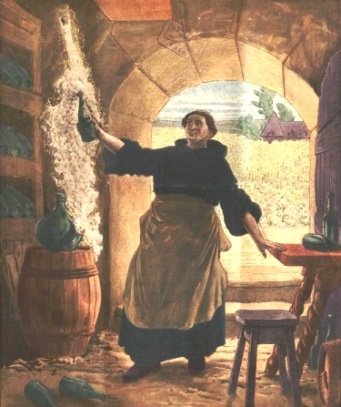
1693 – Legend says Dom Perignon discovers the process for making Champagne on this date, and that he exclaims (in French): “Come quickly, I am tasting the stars!” (If it’s not true, it should be)
1701 – Thomas Blackwell born, Scottish classical scholar, historian and author; now considered a most distinctive and original thinker of the Scottish Enlightenment; noted for An Enquiry into the Life and Writings of Homer (1735), Letters Concerning Mythology (1748), and Memoirs of the Court of Augustus (3 volumes, 1753–1763)
1704 – In the War of the Spanish Succession, the combined English and Dutch fleets capture Gibraltar
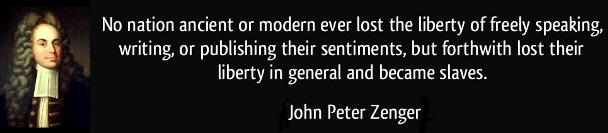
1735 – NY Weekly Journal writer John Peter Zenger is acquitted of seditious libel by the jury because “the truth is not libelous,” establishing basis for freedom of the press
1748 – Abbé Maximilian Stadler born, Austrian composer, musicologist and organist; Commander of the Cistercian Abbey in Lillienfeld (1786-1789); involved with Mozart’s musical estate and the very first Mozart catalog of works
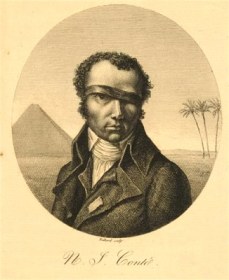
1755 – Nicolas-Jacque Conte born, French mechanical genius and portrait painter; developer of the method from which the modern manufacture of graphite pencils is derived; he is chief of the balloon corps on Napoleon’s 1798 Egyptian expedition
1789 – Members of the French National Constituent Assembly take an oath to end feudalism and abandon their privileges
1790 – U.S. Coast Guard Day * – The Revenue Cutter Service, a U.S. naval task force, the precursor to Coast Guard, is formed by a tariff act
1792 – Percy Bysshe Shelley born, notable English Romantic poet

1821 – The Saturday Evening Post moves to weekly publication
1830 – Plans are laid out for the city of Chicago
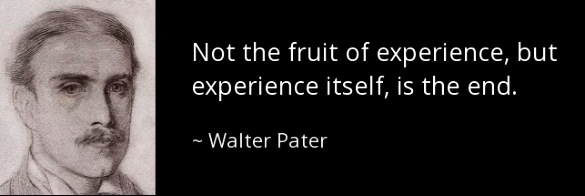
1839 – Walter Pater born, British critic, essayist and humanist
1845 – Pherozeshah Merwanjee Mehta born, Indian political leader, lawyer, activist for Indian self-rule, education and healthcare; co-founder of the Indian National Congress and its President in 1890; founder and publisher of the Bombay Chronicle, English-language weekly newspaper (1910-1959), an important nationalist voice and chronicle of pre-independent Indian political upheavals
1892 – Johanna Bordewijk Roepman born, Dutch composer
1900 – Elizabeth Bower-Lyon born, future wife of King George VI, and Queen consort of the United Kingdom and the British Dominions; mother of Queen Elizabeth II; she lived to the age of 101; greatly admired for her indomitable spirit during WWII and her calm, cheerful public persona, affectionately called ‘the Queen Mum’
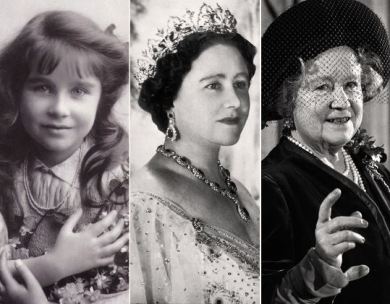
Elizabeth Bower-Lyon — Queen consort — ‘the Queen Mum’
1901 – Louis ‘Satchmo’ Armstrong born, influential virtuoso American Jazz trumpeter and gravel-voiced singer; Good Will Ambassador for the U.S State Department on tours to Africa, the Middle east and Latin America
1908 – Sir Osbert Lancaster born, English cartoonist, stage designer and writer

1910 – Hedda Sterne born in Romania, American Abstract Expressionist and Surrealist painter, member of “The Irascible Eighteen”
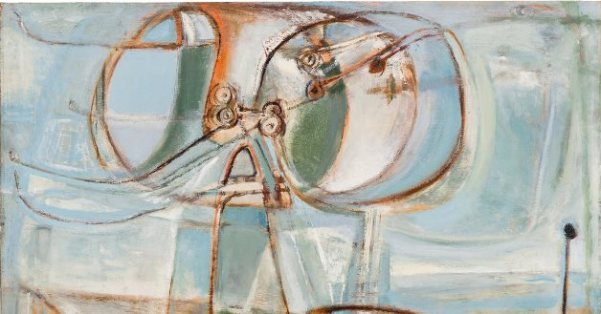
Machines, by Hedda Stern
1912 – Raoul Wallenberg born, Swedish diplomat and humanitarian; as Sweden’s special envoy in Budapest, between July and December 1944, he issues protective passports and shelters Jews in buildings designated as Swedish diplomatic territory, saving the lives of thousands of Hungarian Jews. During the January, 1945 siege of Budapest by the Soviet Red Army, he is detained by SMERCH on suspicion of espionage and disappears; questions remain unanswered about his reported death in Lubyanka, the KGB prison, and Wallenberg’s possible ties to U.S. intelligence. One of those saved by Wallenberg, U.S. Congressman Tom Lantos, sponsors the bill in 1981 which makes Wallenberg an Honorary Citizen of the United States, a privilege given to only eight people to date, including the Marquis de Lafayette (posthumously), Sir Winston Churchill, and Mother Teresa

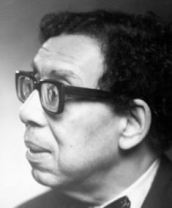
1913 – Robert Hayden born, American poet and essayist; the first African American to serve as Consultant in Poetry (1976-1978) to the Library of Congress (appointment renamed ‘U.S. Poet Laureate’ since 1986)
1914 – After Germany invades Belgium, Britain declares war on Germany, U.S. proclaims neutrality
1920 – Helen Thomas born, American journalist, columnist, White House press corps member who covers eleven U.S. presidents from Eisenhower to Obama; first woman officer of National Press Club, first female member of Gridiron Club, first woman member of the White House Correspondents’ Association and its first female president

1923 – Mayme Agnew Clayton born, American librarian, founder and president of the Western States Black Research and Education center (WSBREC), the largest privately held collection of African-American historical materials in the world, representing the core holdings of the Mayme A. Clayton Library and Museum in Culver City California; for almost 50 years, Clayton single-handedly, using her own re4sources, collected over 30,000 rare and out-of-print books, newspaper clippings, movie posters, sheet music – in all, some 3.5 million items. In 1969, she helped establish the University of California Los Angeles (UCLA) African-American Studies Center Library, formed her own company, Third World Ethnic Books, and supported black filmmakers through the Black American Cinema Society

1928 – Nadežda Mosusova born, Serbian composer, musicologist and writer; professor at the Stankovic Music School in Belgrade
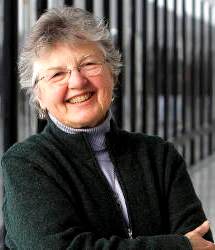
1932 – Frances E. Allen born, American computer scientist; she went to college to become a high school math teacher, but instead became a pioneer in optimizing compilers, and seminal work in computer program optimization and parallel computing; first woman IBM Fellow; first woman recipient of the Turing Award (2006); also honored with a Computer Pioneer Award (2004) and as a Computer History Museum Fellow (2000)
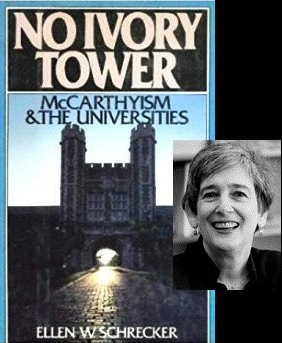
1938 – Ellen Schrecker born, American historian and professor; notable for American Inquisition: The Era of McCarthyism, and several other books on the McCarthy era, also Regulating the Intellectuals: Perspectives on Academic Freedom in the 1980s
1940 – Frances J. Stewart born, British pre-eminent development economist, named one of fifty outstanding technological leaders in 2003 by Scientific American; director of the Centre for Research on Inequality, Human Security and Ethnicity (CRISE) at the University of Oxford; president of the Human Development and Capability Association (2008-2010); author of Technology and underdevelopment, Basic needs in developing countries, and Horizontal inequalities and conflict: understanding group violence in multiethnic societies

1943 – Barbara Saß-Viehweger born in what was then the Province of Saxony; German lawyer, civil law notary and Christian Democratic Union (CDU) politician; member of the Abgeordnetenhaus (a representative assembly governing non-federal regional matters) of Berlin (1975-1995), where she was speaker of the CDU caucus, and chair of the Enquete-Kommission (inquiry commission) for Abgeordnetenhaus administration reform; member of the communal parliament in Steglitz (1971-1975)
1944 – A Dutch informer betrays the hiding place of Anne Frank’s family and their friends. The Gestapo arrests all ten of them and the two Christians who are helping them. Anne and her sister die of typhus in Belgen-Belsen, less than two months before the camp is liberated by British forces in 1945
1956 – Elvis Presley releases “Hound Dog”
1958 – Ricky Nelson’s “Poor Little Fool” is first #1 song on Billboard’s Hot 100 Chart
1961 – Barak Obama born, 44th U.S. President (2009-2017) and Nobel Peace Laureate; the first African American to serve as U.S. President; previously a United States Senator from Illinois and a member of the Illinois State Senate

1964 – After a massive search headed by the FBI, the bodies of three missing C.O.R.E. civil rights workers are found buried in an earthen dam in Neshoba County, Mississippi
1964 – The Kinks single “You Really Got Me” released in U.K.
1966 – Most U.S. radio stations ban the Beatles after John Lennon says band is more popular than Jesus
1971 – Bethan Benwell born, British linguist and author; since 2008, a senior lecturer in English language and Linguistics at the University of Stirling; co-investigator (2007-2010) on the Arts and Humanities Research Council (AHRC) project Devolving Diasporas: Migration and Reception in Central Scotland, 1980–present; she and co-author Elizabeth Stokoe were nominated for the 2007 British Association for Applied Linguistics (BAAL) Book Prize for Discourse and Identity

1977 – President Carter signs a measure establishing the Department of Energy
1984 – African republic Upper Volta changes its name to Burkina Faso
1987 – The FCC votes to rescind the Fairness Doctrine; radio and TV stations no longer required to present controversial issues in a balanced manner
1994 – Yugoslavia withdraws its support for Bosnian Serbs, sealing the 300-mile border between Yugoslavia and Bosnia
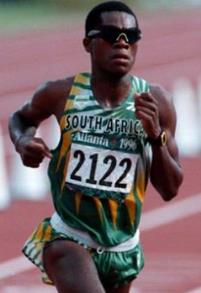
1996 – Josia Thugwane becomes the first black South African to win Olympic gold, running in the Marathon at the Atlanta Summer Games. He reaches the finish line three seconds ahead of Lee Bong-Ju from South Korea, the closest Olympic marathon finish to date. Just five months before the games, he had been carjacked, his chin grazed by a bullet, and his back injured as he jumped from his moving car. His employer, a coal mining company, paid for his medical care and rehabilitation
2006 – Single Working Women’s Day * is started by Barbara Payne, co-founder of the Single Working Women’s Affiliate Network, for both young women just joining the workforce and all the single-parent moms (almost one-third of American families today)
2007 – NASA spacecraft Phoenix is launched, taking the Phoenix Lander to Mars

2010 – The state government of Malaysia and its Islamic Religious Council announced that it will allow Muslim girls under age 16 and boys under 18 to be married, claiming it would reduce the number of babies born out of wedlock; Minister for Women Shahrizat Abdul Jalil called the decision “morally and socially unacceptable”
2014 – Candlelight vigils were held across the United Kingdom to mark the 100th anniversary of Britain’s entry into World War I. Over 744,000 British soldiers died in combat; UK civilian deaths caused by military action or crimes against humanity exceeded 16,800
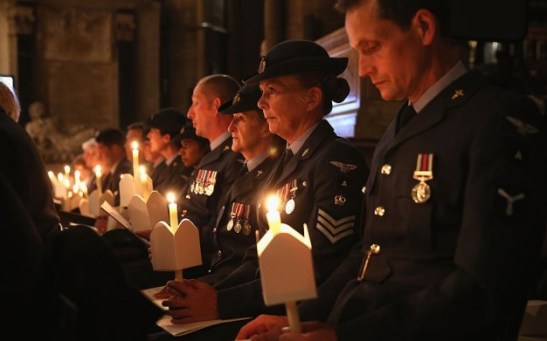
WWI 100th Anniversary Candlelight Vigil at Westminster Abbey
_________________________________________

 Nicole Plyler Fisk
 Gene Howington
 FFS Guest Blogger
 Joy of Fishes
 Chuck Stanley
 shortfinals
 Terry Welshans
 ann li-summers
 wordcloud9


 Flowers For Socrates
Hi I’m back. I have a lot of “Flowers” lined up that I haven’t been able to read. I hope I’ll have time to read them soon because even though they won’t be current, I’m sure I’ll learn lots of things I never knew and wanted to know. This reminds me of a little story about my friend who recently died in the hospice: when he was a little kid (no particular age was mentioned but it was definitely younger than 10) he came to his mother with a worry that was obsessing him, to wit: “I am not sure I’m going to be able to learn everything in the world.”
Turns out that he was right. About a month before he entered the hospice, he remarked to me that he thought it a shame that all the accumulated knowledge a person had would vanish with their demise. I just said, “It won’t.”
Welcome back Malisha –
Deeply heartfelt sympathies for the loss of your friend. There are never enough good people in the world, so each one we lose leaves behind a hole that can’t be filled – that is why it is so important that we remember them and tell their stories.