January 22nd is

Answer Your Cat’s Questions Day
Blonde Brownie Day
National Hot Sauce Day *
Southern Food Day
Roe v Wade Day *
___________________________________________________________
MORE! Shah Jahan, Elizabeth Blackwell and Gertrude B. Elion, click
___________________________________________________________
WORLD FESTIVALS AND NATIONAL HOLIDAYS
Bolivia – Día de la Fundación del Estado Plurinacional de Bolivia
St. Vincent & the Grenandines – National Day
Spain – Valencia: St, Vincent’s Day
United States – New York NY:
New York Chamber Music Festival
Nashville TN: Let Freedom Sing!
(Nashville Symphony honors Civil Rights Movement)
___________________________________________________________
On This Day in HISTORY
1506 – The first contingent of 150 Swiss Guards arrives at the Vatican

1517 – The Ottoman Empire under Selim I defeats the Mamluk Sultanate and captures present-day Egypt at the Battle of Ridaniya
1666 – Shah Jahan, descendant of Genghis Khan, dies at age 74; Mongul emperor of India who built the Taj Mahal as a mausoleum for his wife Mumtaz-i-Mahal

1689 – The Convention Parliament convenes to determine whether James II (and VII), the last Roman Catholic monarch of England, Ireland and Scotland, had vacated the thrones of England and Ireland when he fled to France in 1688
1737 – John Hancock, American Revolutionary and statesman, is born
1771 – The Falkland Islands are ceded to Britain by Spain
1789 – Georgetown University is established in what is now Washington DC
1808 – The Portuguese royal family, Sereníssima Casa de Bragança, arrives in Brazil after fleeing the French army’s invasion of Portugal two months earlier
1824 – The Ashantis defeat British forces in the Gold Coast
1832 – Edouard Manet is born, French Impressionist painter

1849 – Elizabeth Blackwell becomes the first woman in America to receive a medical degree, from the Medical Institution of Geneva NY
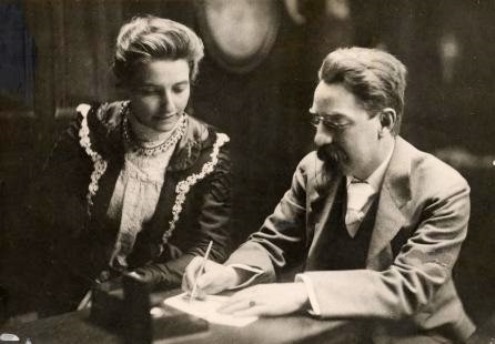
1858 – Beatrice Webb, English economist-sociologist- social reformer, Fabian Society, co-founder with her husband Sidney of the London School of Economics and Political Science, coined term “collective bargaining”
1863 – The January Uprising in Poland, Lithuania and Belarus – a national movement to regain Polish–Lithuanian–Ruthenian Commonwealth from Russian occupation
1877 – Rosa Ponselle born, soprano, debuted with Enrico Caruso in 1918, sang with Baltimore Civic Opera after 1950, mentored Beverly Sills
1879 – James Shields begins a term as U.S. Senator from Missouri, having previously served Illinois and Minnesota. He is the first Senator to serve three different states
1879 – British troops are massacred by the Zulus at Isandhlwana
1887 – Columbia Phonograph Company is founded, getting its name from being headquartered in the District of Columbia
1890 – The United Mine Workers of America is founded in Columbus OH
1892 – Coca-Cola was incorporated
1898 – Sergei Eisenstein, influential Russian filmmaker, is born
1901 – Queen Victoria dies at the age of 81, having served as Britain’s Monarch for almost 64 years; her son Albert Edward, is proclaimed King, as Edward VII
1903 – Hay-Herrán Treaty is signed by U.S. Secretary of State John M. Hay and Colombian Chargé Dr. Tomás Herrán, granting the U. S. rights to land proposed for the Panama Canal
1905 – Bloody Sunday in Saint Petersburg, beginning of the 1905 revolution, 500 people, most of them workers, are killed
1916 – Henri Dutilleux, French composer, is born
1917 – U.S. President Woodrow Wilson makes a speech calling for ending the war in Europe with a “peace without victory” – the U.S. will enter WWI the following April
1918 – Gertrude B. Elion born, American pharmacologist, co-recipient of the 1988 Nobel Prize in Medicine for development of drugs to treat leukemia, gout and malaria, as well as drugs used in organ transplants to help prevent transplant rejection

1924 – Ramsay MacDonald becomes the United Kingdom’s first Labour Prime Minister
1930 – Excavation begins in New York City for the Empire State Building
1932 – New York Governor Franklin D. Roosevelt announces his candidacy for the Democratic presidential nomination
1938 – Thornton Wilder’s Our Town has its first public performance in Princeton NJ
1946 – President Truman establishes the National Intelligence Authority, forerunner of the Central Intelligence Agency
1947 – KTLA, first commercial television station west of the Mississippi River, begins operation in Hollywood
1953 – Arthur Miller’s The Crucible debuts on Broadway

1961 – Wilma Rudolph, sets a new world indoor record in the women’s 60-yard dash, running it in 6.9 seconds
1962 – Tony Bennett records “I Left My Heart in San Francisco”
1962 – Cuba’s membership in the Organization of American States (OAS) is suspended
1963 – The Drifters record “On Broadway”
1964 – The 24th Amendment to the U.S. Constitution is ratified, eliminating the poll tax in federal elections
1964 – Kenneth Kaunda is sworn in as the first Prime Minister of Northern Rhodesia
1966 – The Beach Boys record “Wouldn’t It Be Nice”
1968 – “Rowan & Martin’s Laugh-In” airs on NBC- TV
1972 – The United Kingdom, the Irish Republic, and Denmark join the EEC
1973 – President Nixon announces an accord has been reached to end the Vietnam War
1973 – The U.S. Supreme Court delivers its decisions in Roe v. Wade and Doe v. Bolton, voting 7-2 to legalize elective abortion in all fifty states
1977 – The TV mini-series Roots begins airing on ABC
1997 – The U.S. Senate confirms Madeleine Albright as first woman secretary of state

2002 – Lawyers suing Enron Corp. aske a court to prevent further shredding of documents due to the pending federal investigation.
2003 – Scientists in China report finding fossilized remains of a dinosaur with four feathered wings

2013 – Hot Sauce Day * goes national

___________________________________________________________
Visuals
- Roe v. Wade Day poster
- International flags
- Swiss Guards at the Vatican
- The Taj Mahal
- Edouard Manet – Banks of the Seine at Argenteuil
- Beatrice and Sidney Webb
- Gertrude B. Elion with hard work quote
- Arthur Miller’s The Crucible 1953 Broadway debut – production still
- Madeleine Albright hard work quote
- Fossilized remains of dinosaur with feathered wings
- Hot Sauces
___________________________________________________________

 Nicole Plyler Fisk
 Gene Howington
 FFS Guest Blogger
 Joy of Fishes
 Chuck Stanley
 shortfinals
 Terry Welshans
 ann li-summers
 wordcloud9


 Flowers For Socrates
I answer my cats question by filling up the food bowls.
This as I have said is a very good thread. Lots of things happened on \__ day.
I still have a poll tax record, my understanding the alcohol, wine and beer distributors would go to bars and pass out the paid poll tax receipts.
I think the 3 state senator is interesting. I wonder if they were associated with becoming states.
The Swiss Guards at the Vatican, if I recall correctly only protect the Pope in times of turmoil, they are there to give the pope enough time to escape, many escape routes in the Vatican. If I recall further they were set up by the Medici family, who had great interests in the banking of Rome.
Hadn’t heard about the toll tax receipt scam, but not surprised – it was a rotten system, and bound to be corrupt.
I guess Senator Shields, who was born in Ireland, just liked moving a lot, because all of the states he served came into the Union before the Civil War:
Statehood Dates:
Missouri 1821
Illinois 1818
Minnesota 1858
and his terms of office were
Shields represented Illinois from 1849 to 1855,
Minnesota from 1858 to 1859,
and Missouri in 1879
He was certainly “colorful” –
Shields almost fought a duel with Abraham Lincoln on September 22, 1842. Lincoln had published an inflammatory letter in a Springfield, Illinois, newspaper, the Sangamon Journal that poked fun at Shields, the State Auditor. Lincoln’s future wife, Mary Todd, and her close friend continued writing letters about Shields without Lincoln’s knowledge. Taking offense to the articles, Shields demanded “satisfaction” and the incident escalated to the two parties meeting on an island located between Missouri and Illinois called Bloody Island to participate in a duel (as dueling was illegal in Illinois and the island was under Missouri jurisdiction).[3] Lincoln took responsibility for the articles and accepted the duel. Lincoln had the opportunity to choose the weapon for the duel and he selected the cavalry broadsword, as Shields was an excellent marksman. Just prior to engaging in combat, Lincoln made it a point to demonstrate his advantage (because of his long arm reach) by easily cutting a branch just above Shields’ head. The two participants’ seconds intervened and were able to convince the two men to cease hostilities, on the grounds that Lincoln had not written the letters.
– – –
When he ran in Illinois for the U.S.Senate, his election was voided when he arrived in Washington by the Senate on the grounds that he had not been a United States citizen for the nine years required by the United States Constitution; having been naturalized October 21, 1840. He returned to Illinois and campaigned for re-election, and won the special election to replace himself, and was then seated.
– Wikipedia