Welcome to The Coffee Shop, just for you early risers on Monday mornings. This is an Open Thread forum, so if you have an off-topic opinion burning a hole in your brainpan, feel free to add a comment. ______________________________________________________
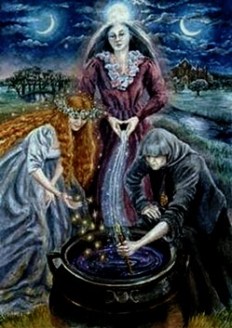
“. . . the night of Samhain, when the barrier between the worlds is whisper-thin and when magic, old magic, sings its heady and sweet song to anyone who cares to hear it.” ― Carolyn MacCullough, Once a Witch
There’s a long and often tragic history attached to that word. In our enlightened 21st century Western culture, it’s more likely to be used as a somewhat more polite euphemism for that rhyming ‘B’ word.
Which is strange, when you think about it. It’s more polite to call a woman a name that, not so far back in our history, would have caused her to be hanged, drowned or burnt at the stake, than a word designating a female dog?
A large part of today’s popular appeal of mythical figures like vampires, werewolves, witches, and assorted other “things that go bump in the night” in books and movies, and on television, must surely come from their perceived power. Eternal life, shape-shifting, and spell-casting are enviable traits to people enthralled in a daily grind of never-ending projects and arbitrary deadlines. We all want a little magic in our lives.
Many poems have been written about witches. With Halloween only a bit more than a week away, I’ve gathered several of them here. So curl up by a fireside, or under the bedclothes, and let a shiver creep up your spine. Then again, maybe you’ll catch a glimpse of someone you know, or even yourself.
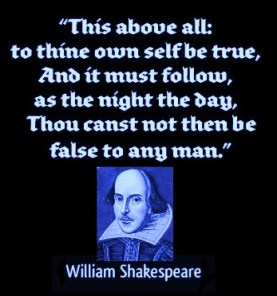
William Shakespeare’s Macbeth was first performed in 1606, over four hundred years ago, but his three scary witches still hold audiences spellbound. As he warns us:
By the pricking of my thumbs, Something wicked this way comes.
– Macbeth, Act IV, scene 1
SONG OF THE WITCHES: “Double, double toil and trouble”
(from Macbeth Act IV, scene 1)
Double, double toil and trouble; Fire burn and cauldron bubble. Fillet of a fenny snake, In the cauldron boil and bake; Eye of newt and toe of frog, Wool of bat and tongue of dog, Adder’s fork and blind-worm’s sting, Lizard’s leg and howlet’s wing, For a charm of powerful trouble, Like a hell-broth boil and bubble.
Double, double toil and trouble; Fire burn and cauldron bubble. Cool it with a baboon’s blood, Then the charm is firm and good.
Double, double toil and trouble; Fire burn and cauldron bubble.
curling them around i hold their bodies in obscene embrace thinking of everything but kinship. collards and kale strain against each strange other away from my kissmaking hand and the iron bedpot. the pot is black, the cutting board is black, my hand, and just for a minute the greens roll black under the knife, and the kitchen twists dark on its spine and i taste in my natural appetite the bond of live things everywhere.
Stephen “dont call me Space Cowboy Maurice” Miller has shrewdly used his time to feather his own WH nest by controlling immigration policy while his noisier counterpart Steve Bannon was fighting with everybody else.
One can see how Miller’s time working for Sessions has seen the curious direction of US demographic policies back to pre-Civil Rights Era sensibilities that fit the malevolence of Lord Dampnut. Immigrants and by twisted inference, PoC will become enemies of the state,
In matters of allowing racial others entry or existence, Miller knows that it is all about the numbers, and unfortunately, another interwar regime in Europe was also quite circumspect in its being careful about demography rather than democracy.
I asked the officials how Miller, with his limited experience in the executive branch, had become such a formidable bureaucrat so quickly. “Look at who the senior advisers to the President were and are—Bannon, Kushner—Miller’s the only one with prior government experience,” the State Department official told me. “He knows something about government, and it turns out to be useful. He saw how the sausage was made. And he’s smart enough to make his own sausage.” The chaos of the Trump Administration helped. “The White House remains in utter disarray,” the official said. “If you don’t have an established set of procedures in place, it’s very easy to create your own process.”
Stephen Miller (born August 23, 1985) is U.S. President Donald Trump’s senior advisor for policy. He was previously the communications director for then-Alabama senator, Attorney General Jeff Sessions, and served as a press secretary to Republican U.S. Representatives Michele Bachmann and John Shadegg.
One of the White House officials I spoke to described the process as a harbinger of how immigration issues will be handled in the future. “The Domestic Policy Council is going to influence other processes that involve immigration,” the official said. “It’s going to get worse and worse.”[…]
Miller was expanding his influence. “He’s figured out early on that, just being at the D.P.C., he’s not going to be able to make key decisions unless he co-opts the N.S.C.,” the official went on. “He needs the security element attached to it. He’s worked to get himself in traditional N.S.C. decisions so that he can say, ‘This isn’t just me. We ran this by the N.S.C.’ It started with one or two issues. But it’s becoming anything that has to do with refugees, vetting, immigration, or security. Because he’s an assistant to the President, what person is going to say to him, ‘No, you can’t sit in on my meeting.’ The reason Stephen Miller is so dangerous? He’s clearly got a vision. He knows about narrative, about messaging. He’s figuring this out.”
One only has to look at Miller’s progress of bureaucratic demolition, rather than the fancifully misnamed, Bannonist “deconstruction of the administrative state” to see how a RW policy fiefdom has been created from the chaos fomented by Trumpian appointment of toadies and unqualified sycophants.
Rather than providing the critique that a deconstruction could provide, it is the simple resurrection of the same Jim Crow hatred that promoted the construction of Confederate statues in the 1920s, their reactionary reenactors in the 1960s, and our current flock of punchable tiki-torchers.
What Whitman’s book reminds us is that the US anti-miscegenation and citizenship laws were always about white supremacy cloaking itself in the flag and that was as attractive to the national socialists in Germany as they are to today’s neo-nazis.
Contrary to those who have insisted that there was no meaningful connection between American and German racial repression, Whitman demonstrates that the Nazis took a real, sustained, significant, and revealing interest in American race policies.
But while Jim Crow segregation was one aspect of American law that appealed to Nazi radicals, it was not the most consequential one. Rather, both American citizenship and antimiscegenation laws proved directly relevant to the two principal Nuremberg Laws—the Citizenship Law and the Blood Law. Whitman looks at the ultimate, ugly irony that when Nazis rejected American practices, it was sometimes not because they found them too enlightened, but too harsh.
Bill Moyers: You begin the book with a meeting of Nazi Germany’s leading lawyers on June 5, 1934, which happens, coincidentally, to be the day I was born.
James Whitman: Oh boy, you were born under a dark star.
Moyers: To be sure. Adolf Hitler had been chancellor of the Reich for a year and a half. Nazis were rapidly consolidating their hold over Germany. And this was no gathering of everyday, garden-variety lawyers..
Whitman: No, it wasn’t. It was chaired by Hitler’s minister of justice and attended by the leading figures among Nazi lawyers.
Moyers: Why had they gathered? What was their mission?
Whitman: They were there to begin crafting what would eventually become the notorious Nuremberg Laws, which were promulgated a little bit more than a year later, in September of 1935. Those laws would be the culmination of the first phase of the Nazi program of persecution directed against German Jewry. And they were there to respond to the demands of radical Nazis for the creation of a new kind of race state in Germany.










![DMM2BOpUQAA1m70_1_[1]](https://flowersforsocrates.com/wp-content/uploads/2017/10/dmm2bopuqaa1m70_1_1.jpg?w=519&h=364)


 Nicole Plyler Fisk
 Gene Howington
 FFS Guest Blogger
 Joy of Fishes
 Chuck Stanley
 shortfinals
 Terry Welshans
 ann li-summers
 wordcloud9


 Flowers For Socrates