Jane Kenyon (1947-1995) made a long journey in a short life, before she died from leukemia a month and a day before her 48th birthday.
In the years prior to her death, she published four volumes of poetry, and a volume of translations of the poems of Russian poet Anna Akhmatova. She still was editing Otherwise: New and Selected Poems until just before her final days. The editing was finished later by her husband, poet Donald Hall, and Otherwise was published posthumously.
Part of her journey can be seen in these first two poems. The Argument is a childhood memory of an encounter with death, while Let Evening Come is written from her changed perspective as an adult. The mood of Let Evening Come eerily foreshadows her struggle for acceptance of the illness that would take her life. ___________________________________________________________
The Argument
On the way to the village store I drive through a down-draft from the neighbor’s chimney. Woodsmoke tumbles from the eaves backlit by sun, reminding me of the fire and sulfur of Grandmother’s vengeful God, the one who disapproves of jeans and shorts for girls, dancing, strong waters, and adultery.
A moment later the smoke enters the car, although the windows are tight, insinuating that I might, like Judas, and the foolish virgins, and the rich young man, have been made for unquenchable fire. God will need something to burn if the fire is to be unquenchable.
“All things work together for the good for those who love God,” she said to comfort me at Uncle Hazen’s funeral, where Father held me up to see the maroon gladiolus that trembled as we approached the bier, the elaborate shirred satin, brass fittings, anything,
oh, anything but Uncle’s squelched and made-up face. “No! NO! How is it good to be dead?” I cried afterward, wild-eyed and flushed. “God’s ways are not our ways,” she said then out of pity and the wish to forestall the argument.
A spoils system also accommodates those GOP shibboleths that represent LBJ’s Great Society beyond their usual attack on civil rights, so anything else remotely undermining the US ruling class becomes fair game. Maybe this time around the fiscal hawks get to catch the car they’ve been chasing and eliminate the NEA and NEH. Because obscenity is best left to the White House (MakeAmericaGropeAgain).
“Grandiose oil portraits of former government agency heads continue to cost taxpayers roughly $20,000 for each new painting.” (Heritage Foundation)
Here’s the giant portrait Donald Trump commissioned of himself with charity money (only $10,000) … but not Grandiose! SAD!
Yet there will be no “budget balancing”, probably another MIC war or something resembling it, and expecting arts investment from POTUS45* will be much like the financing of auction art. And more will still be spent on military bands.
But wait, how is it that the Heritage foundation gets to write government policy… see ALEC, as if overwhelming force was the same as choosing easy targets. Like cutting .009% of the Federal Budget does … what?
Corp for Public Broadcasting would be privatized, National Endowment for the Arts would be eliminated entirely https://t.co/4kRG3iUcNL
The Heritage blueprint used as a basis for Trump’s proposed cuts calls for eliminating several programs that conservatives label corporate welfare programs: the Minority Business Development Agency, the Economic Development Administration, the International Trade Administration and the Manufacturing Extension Partnership. The total savings from cutting these four programs would amount to nearly $900 million in 2017.
At the Department of Justice, the blueprint calls for eliminating the Office of Community Oriented Policing Services, Violence Against Women Grants and the Legal Services Corporation and for reducing funding for its Civil Rights and its Environment and Natural Resources divisions.
At the Department of Energy, it would roll back funding for nuclear physics and advanced scientific computing research to 2008 levels, eliminate the Office of Electricity, eliminate the Office of Energy Efficiency and Renewable Energy and scrap the Office of Fossil Energy, which focuses on technologies to reduce carbon dioxide emissions.
Conservatives allied with fiscal hawks such as Pence, Paul and the Heritage Foundation say the time is long past due to get serious about cutting the federal deficit.Under the State Department’s jurisdiction, funding for the Overseas Private Investment Corporation, the Paris Climate Change Agreement and the United Nations’ Intergovernmental Panel on Climate Change are candidates for elimination.
The National Endowment for the Humanities provided $47,000 for undergraduate classes that teach students about laughing and the nature of humor. The classes will focus on how humor differs between cultures and how it can be used to deal with tragedies. (Heritage Foundation)
“The Trump Administration needs to reform and cut spending dramatically, and targeting waste like the National Endowment for the Arts and National Endowment for the Humanities would be a good first step in showing that the Trump Administration is serious about radically reforming the federal budget,” said Brian Darling, a former aide to Paul and a former staffer at the Heritage Foundation.
In the discipline of international relations there are contending general theories or theoretical perspectives. Realism, also known as political realism, is a view of international politics that stresses its competitive and conflictual side. It is usually contrasted with idealism or liberalism, which tends to emphasize cooperation. Realists consider the principal actors in the international arena to be states, which are concerned with their own security, act in pursuit of their own national interests, and struggle for power. plato.stanford.edu/…
Nov 18, 2016 – Obama and E.U. Leaders Agree to Keep Sanctions on Russia www.google.com/…
Most fascinating are PEOTUS’s attempts to divert attention around the inaugural from other potential scandals and to suggest his Reagan-ness by referring to the Reagan-Gorbachev summit in Iceland in the 1980s.
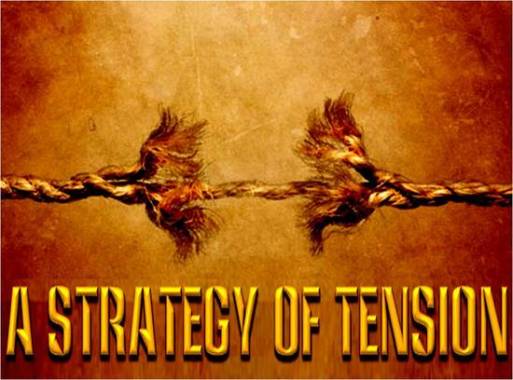
In 2017’s version with TrUmp-Putin, the Russians get a marvelous parting gift of anywhere around 100 Billion dollars from lifting sanctions. And then to have the moment get disclaimed (more fake news?) even as it may be Trump-Team incompetence because the new diplomacy as a strategy of tension is founded on reality-TV narratives.
We know that reality TV thrives on the dramatic potential of massive, dirty, wickedly personal fights. If you’re not in at least one horrible knockdown drag-out with a fellow cast member every three episodes or so, you are not long for TV. The distinctly Trump element of this is the second part—like any good reality TV-villain, he’s defined largely in opposition to others. …
His character, his brand, is a hazy, amorphous cloud of connotation and suggestion until the moment it comes into conflict with someone. And then Trump—his brand—can easily shift into becoming whatever that person is not. It’s a trope from competition and lifestyle reality shows alike. Personal clashes are never about the fight itself, but about defining who you are.
Omarosa is an American reality game show and reality show personality, turned politician. She was a contestant on the first season of Donald Trump’s original American version of The Apprentice
Constant relitigation of ancient injuries.
The inevitable narrative corollary of characters built through interpersonal battles is that the battles keep coming back…
It even happens more and more on competition shows like The Bachelor, which has moved to a model of recycling already established personalities through its franchises for exactly this narrative purpose. It’s a good shortcut if there’s no current battle worth fighting, but it’s even more useful as distraction from a current battle you’re losing.
So in moments of stress—in that early GOP debate when he struggled with an answer on women, in the aftermath of the Access Hollywood tape, now that the transition situation has gotten rocky—Trump leans heavily on this reality trope. Bring up Rosie O’Donnell, dredge up ancient Clinton scandals, and perpetually refight an election that’s already finished. Every political candidate relies on some distraction technique to try to shift a news cycle away from their own flaws, but Trump delights in calling back to long-ago personal drama with all the relish of a housewife who claims to have forgiven but has never forgotten…
This is a vital part of reality-TV storytelling, and one that Trump has been careful to hew to as much as possible in the last year. In a traditional political-scandal situation, the pattern is usually that a scandal will break, everything will get very silly for a news cycle or two, and then a politician will be careful to stay on the straight and narrow for as long as possible. This is fundamentally unlike how reality-TV storytelling works.
In the aftermath of scandal, good reality personalities (and just as importantly, good reality-show producers and editors) have to be already building toward the new fight. It doesn’t matter why you’re onscreen as long as you are onscreen, and reality-TV survival hinges on your ability to provide sufficiently entertaining material to the editors at regular, easily narrativized intervals…
It’s still surprising in the context of the White House and the world stage, but if you put him on a white sofa next to Andy Cohen and a tasteful vase of tulips, Trump’s word-salad pronouncements and his inexplicable obsession with picking fights makes sense.
Trump is not Reagan and Putin no Gorbachev, but like the imagination needed to use bad props at a press conference, Steve “Bonzo” Bannon and the mini-moguls want to relive the 1980s.
Their brand of creative destruction has run out of plots and trying to frame Trump as Reagan may still wind up as Nixonian conflicts if Trump gets impeached.
The premise of the recent HBS article suggests that the election has encouraged a successful national strategy of misanthropy in the executive branch and that political correctness has greater clarity relative to race, gender, class, among other indicators and has some normative function. It also assumes that cognitive dissonance infects only one dacha.
While officially dismissed in 2010 by Vladimir Putin‘s spokesman Dmitry Peskov,[5] it has been claimed that the dacha was built for the personal use of President Putin, and that its construction began during his first Presidency. Detailed claims about the project, which allegedly made improper use of state resources, were made by Sergei Kolesnikov, a businessman with ties to Putin dating from his time in Saint Petersburg prior to entering Kremlin politics.[6]en.wikipedia.org/…‘s_Palace
In a mediated age, there are no such guarantees or assurances and while a candidacy can be a capitalist commodity product, it is more like the delivery of audiences, however reactionary or vulgar in their range from sacred to profane. Messaging must for Democrats reflect its corresponding public sphere rather than the petty scolding often found in liberal domains. As such there is a natural superiority of democratic humor in its ability to appreciate both nuance and common denominators. RWNJ have shown that they lack the reflection to appreciate irony even in the age of its end.
PEOTUS Kozyr’s strategy of political incorrectness was not as much successful as his opposition was incompetent, and in that context, the opposition had a cumulative advantage’s chance in Hell, however frozen over. The Democratic party had in that sense, a cumulative disadvantage, easily leveraged in an imperfectly competitive market environment for votes. Darn those utils in a liberal democracy.
TrUmp, as his hagiographers or sycophants tell us, does have a sense of task-commitment if only due to his unhinged nature (insert Godwin psycho-history “category” here). Why else would America be not “Great” now, except as a pathological construction, enabled by ‘baggers astroturfed by the Koch Brothers.
His commitment is to being a punk as the anecdotal comments by his father reveal and exhibited by being sent to military school. This HBS article only continues the legitimation crisis normalizing what to date has been more than unethical behavior but illegal acts.
His political correctness is simply the dichotomous GOP version of bigotry that as we have seen festered beneath the imaginary jackboot of PBO and has reemerged in the victory of Orange Gazbag.
That autocracy is now normalized, operationalized, and instrumentalized by a GOP legislative majority at a number of levels and soon to be reified in SCOTUS. Only in the current strategy of tension could true claims be deferred as “post-truth”. Everyday life now is infested with the rationalizations of anti-democratic incivility because a punk will be POTUS* in a couple of days.
To establish the legitimacy of the category, he made a consistent and devilishly tautological argument: In the category of traditional presidential candidates,
the politicians are all politically correct.
When they get in power, they fail you.
Hence you don’t want a leader in that category — you want one in a new category called politically incorrect presidential candidates.
I have been a huge success in business by being politically incorrect.
Therefore: political correctness = failure, and political incorrectness = success.
The word cuckold derives from the cuckoo bird, alluding to its habit of laying its eggs in other birds’ nests.[2][3] The association is common in medieval folklore, literature, and iconography.
It doesn’t matter whether he consciously set out to pursue that strategy or whether it was the result of his personality and instincts. The outcome is the same in either case…
Because the mind craves simplicity and consistency, the product that feels most comfortable tends to be the one with which people have a long and dependable experience. For example, someone’s favorite Chinese restaurant is their favorite because they have gone there the most often and know the people and the menu and the layout best. Former Procter & Gamble CEO A.G. Lafley and I have termed this “cumulative advantage,” and it is an underappreciated way of attaining sustained leadership in a market…
And because he did it continually during the campaign, he helped voters find him increasingly comfortable and familiar. This is why he never apologizes for his political incorrectness: It would undermine his consistency and be a disaster for him…
…more recently, causing international incidents with China and rebuffing intelligence briefings on Russian hacking, the politically correct thing to do would have been to apologize and attempt to retreat diplomatically from his faux pas. Nope. Instead of showing remorse, he has gone on the attack…
Apologizing would have tossed him back into the “traditional” category, where he would have been an ineffective player, like Carson or Sanders. Instead, political incorrectness piled on top of political incorrectness reinforces the fact that he is in a different category and makes him an ever more familiar member of that category.
When they are doing something that you think is crazy, don’t blame them. They aren’t a “basket of deplorables.” They are your customers…
Understand why they are buying it and give them a compelling reason to buy yours instead…
Trump understood that it was essential to keep his competitor from waking up to his strategy, so he worked to reinforce her blindness by unfailingly acting infuriatingly politically incorrect…
Third, when things don’t go your way, don’t blame your downfall on events outside your control. Every strategist faces these issues; the best strategists learn not to scapegoat them. But what has the entire Democratic-leaning universe done in this case? They have blamed Russian interference.
She underestimated her competitor until the middle of election night. And there is no sign that she or her team even now understands what really happened.
My view on this matter as a strategist, not a political partisan or pundit, is that Trump’s election strategy was brilliant. He understood that there was only one way to win the nomination against entrenched competitors in a crowded field:
He had to create a new category and dominate it, building cumulative advantage.
He understood that there was only one way to win the presidency: He had to work for the entire campaign on being as consistent as possible to become the most familiar and comfortable choice he could possibly become.
And after all of that, he had to hope for an entirely improbable win, because that was the best he was ever going to get. But an improbable win is still a win.
January 16 is National Religious Freedom Day in the United States.
President Barack Obama in his Religious Freedom Day Presidential Proclamation:
“I call on all Americans to commemorate this day with events and activities that teach us about this critical foundation of our Nation’s liberty, and show us how we can protect it for future generations here and around the world.”
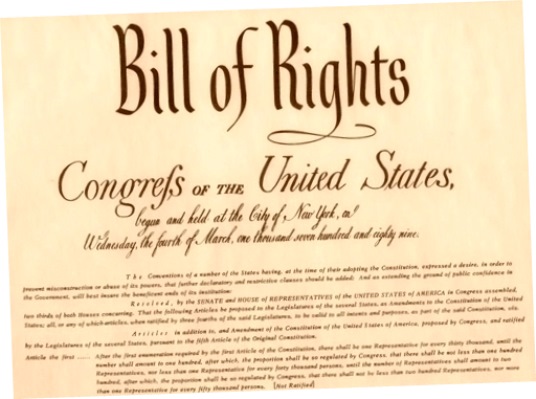
The Virginia Statute for Religious Freedom was signed January 16, 1786, and it is honored each year on National Religious Freedom Day. Thomas Jefferson’s landmark statute enacted by the Virginia General Assembly became the basis for Congressman Fisher Ames’ establishment clause of the First Amendment of the U.S. Constitution: “Congress shall make no law respecting an establishment of religion, or prohibiting the free exercise thereof…” ___________________________________________________________
On April 30, 1789, George Washington stood on the balcony of Federal Hall overlooking Wall Street in New York City, and took the oath of office to become the first President of the United States.
On August 17, 1790, the President, accompanied by Secretary of State Thomas Jefferson, Governor George Clinton of New York, U.S. Supreme Court Justice John Blair of Virginia, and U.S. Congressman William Loughton Smith of South Carolina, arrived in Newport, Rhode Island.



 New England Clam Chowder Day









 Nicole Plyler Fisk
 Gene Howington
 FFS Guest Blogger
 Joy of Fishes
 Chuck Stanley
 shortfinals
 Terry Welshans
 ann li-summers
 wordcloud9


 Flowers For Socrates