
by NONA BLYTH CLOUD
I am by choice most thoroughly a creature of the West Coast convergence of sea and desert, which gives new meaning to “dry land.”
Autumn, when the sun recrosses the equator heading south, might tempt me to try a different country. There’s something very alluring about leaves turning amber and russet, then crackling underfoot, about light that glows in an ever-afternoon, and air that breathes soft and cool upon the skin but smells of smoke-tang and apple cider.
Yet while Time may tarry, it never stops. As sure as the sun, as constant as the constellations, Winter will follow Autumn. And then I look around my dry-scape of arroyos and beaches, content to be warmer than the creatures of that other country. Better earthquakes than blizzards for me.
In celebration of the glories of this enticing season, I offer two very different poets.
_______________________________________________________

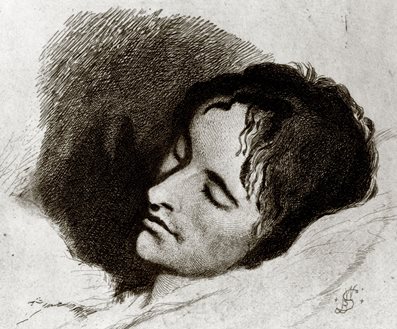
John Keats, drawn
a month before he died,
by Joseph Severn
Our first poet is John Keats, who was born on Halloween – October 31, 1795, in London – and died on February 23, 1821, of tuberculosis in Rome, where he had gone in a vain attempt to restore his health.
But in his 25 short years, he won undying fame, and wrote some of the most beautiful poems in the English language: “Ode on a Grecian Urn,” “Ode on Melancholy,” “Ode to a Nightingale” and “To Autumn,” which is the final work of his 1819 odes:
TO AUTUMN
SEASON of mists and mellow fruitfulness,
Close bosom-friend of the maturing sun;
Conspiring with him how to load and bless
With fruit the vines that round the thatch-eves run;
To bend with apples the moss’d cottage-trees,
And fill all fruit with ripeness to the core;
To swell the gourd, and plump the hazel shells
With a sweet kernel; to set budding more,
And still more, later flowers for the bees,
Until they think warm days will never cease,
For Summer has o’er-brimm’d their clammy cells.
Who hath not seen thee oft amid thy store?
Sometimes whoever seeks abroad may find
Thee sitting careless on a granary floor,
Thy hair soft-lifted by the winnowing wind;
Or on a half-reap’d furrow sound asleep,
Drows’d with the fume of poppies, while thy hook
Spares the next swath and all its twined flowers:
And sometimes like a gleaner thou dost keep
Steady thy laden head across a brook;
Or by a cyder-press, with patient look,
Thou watchest the last oozings hours by hours.
Where are the songs of Spring? Ay, where are they?
Think not of them, thou hast thy music too,—
While barred clouds bloom the soft-dying day,
And touch the stubble plains with rosy hue;
Then in a wailful choir the small gnats mourn
Among the river sallows, borne aloft
Or sinking as the light wind lives or dies;
And full-grown lambs loud bleat from hilly bourn;
Hedge-crickets sing; and now with treble soft
The red-breast whistles from a garden-croft;
And gathering swallows twitter in the skies.
The “Season of mists and mellow fruitfulness,” that time of his full power as a poet was too short for Keats, and he died when the songs of spring were yet to come.
Keats did possess the gift of prophecy: “A thing of beauty is a joy forever: its loveliness increases; it will never pass into nothingness.”
_______________________________________________________
Continue reading →

 The Koch Brothers’ choices for Speaker of the House


 By ann summers



 Nicole Plyler Fisk
 Gene Howington
 FFS Guest Blogger
 Joy of Fishes
 Chuck Stanley
 shortfinals
 Terry Welshans
 ann li-summers
 wordcloud9


 Flowers For Socrates