
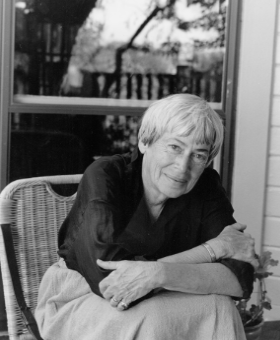
Ursula Le Guin
(Photograph by Marian Wood Kolisch)
By Elaine Magliaro
Ursula Le Guin is an award-winning American author of novels, children’s books, and short stories. Her preferred genres are fantasy and science fiction. Le Guin has also written poetry and essays. Harry Kunzru (The Guardian) wrote last month that many readers discover Le Guin’s work when they are young–“through her Earthsea sequence, now acknowledged as one of the great works of 20th-century fantasy.”
Kunzru:
In an astonishing run in the late 1960s and early 70s, Le Guin produced not just Earthsea but several of the great novels of science fiction’s postwar new wave. The Lathe of Heaven, The Dispossessed, The Word for World Is Forest and The Left Hand of Darkness fulfilled the genre’s promise, using speculation to address social, political, ethical and metaphysical questions. Since then she has continued to publish novels and short stories informed by the mystical philosophy of the Tao Te Ching and the west coast tradition of political radicalism, written in a clear, clean prose that is never tainted by inkhorn medievalism or technological jargon. A two-volume collection of stories, The Unreal and the Real, was published this summer, giving an overview of her entire career.
Because of her subject matter, Le Guin isn’t always recognised for what she is, one of the great writers of the American west, a product of a coastal tradition that looks forward at the Pacific with a wilderness at its back and the great cities of Europe very far to the rear.
In November, Le Guin received the Medal for Distinguished Contribution to American Letters at the National Book Awards. She gave an important acceptance speech about the dangers that literature faces–corporate greed, maximization of profits, obsessive technologies, art treated as a market commodity–in present times.
Continue reading →







 Nicole Plyler Fisk
 Gene Howington
 FFS Guest Blogger
 Joy of Fishes
 Chuck Stanley
 shortfinals
 Terry Welshans
 ann li-summers
 wordcloud9


 Flowers For Socrates