
February 27th is
Anosomia Awareness Day *
Kahlua Day
Strawberry Day

Museums Advocacy Day *
International Polar Bear Day *
__________________________________________
Anosomia Awareness Day *
Kahlua Day
Strawberry Day
Museums Advocacy Day *
International Polar Bear Day *
__________________________________________
By ann summers
![DWfyeeMVwAE7CKd[1]](https://flowersforsocrates.com/wp-content/uploads/2018/02/dwfyeemvwae7ckd1.jpg?w=494&h=615)
I tend to watch college sports on television because the promotional video for the institution usually shown around halftime is more interesting in terms of representing the institutional identity. But they are representations that are at risk like the current scandal involving a significant number of major US university athletic programs.
Paying college students because they don’t share in any of the profits always comes up even as it is irrelevant to the ethical and moral actions that must occur at the institutional level, and even before addressing some illusion of fairness made more complex by issues of race/class/gender.
The topic of paying college athletes is only one aspect of an entire exploitative process that should be completely revised to regulate what has become a pernicious, yet historical corruption of sports and capitalism. This has emerged again in the midst of a wide ranging scandal driven by corporations yet aided by significant elements of major universities.
The fundamental and perennial problem in proposing the paying of student-athletes is that the non-academic activity as extra-curricular makes one not a student by definition.
No student should be paid for athletic performance. Period. Because there is a difference between professional and amateurs that is the difference between the avocational and the vocational. Media contracts and sporting goods manufacturers should not determine those distinctions, however lucrative.
But that’s OK, many who major in the arts consider in the college context the utterance of the non-artistic activities as “academic” as though what they did creatively was somehow non-academic or extracurricular. Some scientists love talking about all non-science as somehow recreational, so ignorance has no SAT score, even as those who talk about hard and soft sciences are really talking about penises.
The real problem lies in Division One (D-I) and D-II corruption in scholarship money and corporate sponsorships, plus the interference of boosters/alumni, and the natural corruption of the schools themselves because of their administrations’ desire to use conventional “for-profit” practices in a non-profit enterprise.
Everyone who goes to college gets to be a student-athlete. Support them because they’re there to learn.
Meritocracy for athletic performance should be reserved for the world outside college, even as universities have been the development platform for so many professional athletes.
Recruitment for admission should become less competitive relative to athletics because we’ve reached the tipping point where ad hoc sex work becomes a tool for the admissions office.
Yes there is a history and even a historical legacy of corruption with massive violations ranging from the hiring of relatives, the procuring of loans, houses, actual cash transfers. This should end if only because the system has become witheringly corrupt — see Michigan State U. and gymnastics, or Penn State and football.
The revenue generating nature of some university sports prefers some over others with the need to generate revenue-sharing to support the “non-revenue” generating sports, and yet it makes the NCAA complicit in governance creep.
Compliance and penalties makes legal work the profit center for effects that are not about programs but naming rights and other ancillary enterprises remote from the actual educational missions.
Proposing payment of student athletes on the model of student employees or even graduate assistants is simply unworkable considering the difference between for example, working in the cafeteria and one-and-done first year D-1 basketball talent.
Excuses about meal money and perks are just the surface of an entire compliance / violation structure that needs to be reformed, even as there are entire generations used to the endless violation culture of corrupting every aspect of the institution, most egregious being the academic violations.
Hence the differences between the enforcement structure’s contradictions of student-transfer rules to other institutions versus the scofflaw-coaches who have no such embargoes on their quitting and rehiring at other schools.
Eligibility has already been corrupted by other variance issues like giving some athletes graduate-transfer status without sitting out.
Further complications come from individual university rules, conference rules, state rules, and the public-private institutional divide.
There are simple regulatory solutions, despite all that lawfare keeping attorneys and sports agents employed. Recognizing the minor league development role of universities would go a long way to getting past the professional/amateur ambiguities.
And then there’s the current crisis, driven by shoe companies Adidas being the first to get caught corrupting assistant coaches and the awareness of coaches and athletic departments, Post-Paterno.
Those who want professional status and the payday get to defer their education or even ignore it, since the corporations have already corrupted program support structures.
Separate out the pre-professionals before college in the “revenue sports”, leaving the remainder to serve until their degree programs are completed. Considering that recruitment goes down to the middle school should have already signaled the need for change. All that corporate corruption money should go into national team development in sports no different than the models for the Olympic teams. Use the NCAA to manage amateur drafts in all fields (including the Olympic teams); it can recover its regulatory function even as it has become corrupted by BCS and March Madness.
Corporations and all those affiliated alumni boosters would contribute to non contingent budgets with event revenue completely autonomous from athletic departments rather than the money-laundering that currently occurs.
The problems exists in the BS ideology of assuming free-market principles in a cartelized economy where the very small number of actual professional athletes in a few sports should not dictate the opportunities for the majority.
Otherwise, the University of Phoenix should really have a football team for its stadium, because once it’s pay for play, all bets are on, and academic departments for gaming industry wagering (a sub-field for Hospitality Studies) will have the highest paid faculty.
Here’s a list of every current player implicated in the college basketball recruiting scandal, including information on whether they’ll continue to play https://t.co/JtexcUQe6M
— Sports Illustrated (@SInow) February 25, 2018
Museum Advocacy Day

Levi Strauss Day *
Pistachio Day

Tell a Fairytale Day
_________________________________________
___________________________________________________
___________________________________________________

Clam Chowder Day
Open That Bottle Night *
Sword Swallowers Day
Chocolate-Covered Peanuts Day
_______________________________________

Girl Scout Cookie Weekend
Tortilla Chip Day
World Bartender Day
World Information Architecture Day
____________________________________________
Banana Bread Day
Diesel Engine Day *
Dog Biscuit Day
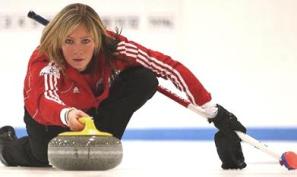
Curling is Cool Day
Digital Learning Day *
____________________________________________

by NONA BLYTH CLOUD
What’s in a name? Names are a symbol for who we are, but sometimes a birth name can feel like a once-warm coat we’ve outgrown: a little shabby, and tight in all the wrong places.
So it was for today’s poets. Both of them have taken distinctive names completely different from their original identities, new names which have meaning and power for them.
___________________________________
Yusef Komunyakaa (1947 – ) is a African American poet who 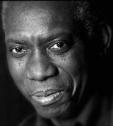 was born as James William Brown, in Bogalusa Louisiana, the eldest of five children. He served one tour of duty in South Vietnam during the war, and worked for the military paper Southern Cross, leaving the service in 1966. He earned an M.A. in writing from Colorado State University in 1978, and an M.F.A. in Creative Writing from the University of California, Irvine, in 1980. He was awarded the 1994 Pulitzer Prize in Poetry for Neon Vernacular. Currently, Komunyakaa is a professor in the Creative Writing Program at New York University.
I’ve been here before, dreaming myself
backwards, among grappling hooks of light.
True to the seasons, I’ve lived every word
spoken. Did I walk into someone’s nightmare?
Hunger quivers on a fleshly string
at the crossroad. So deep is the lore,
there’s only tomorrow today where darkness
splinters & wounds the bird of paradise.
On paths that plunge into primordial
green, Echo’s laughter finds us together.
In the sweatshops of desire men think
if they don’t die the moon won’t rise.
All the dead-end streets run into one
moment of bliss & sleight of hand.
Beside the Euphrates, past the Tigris,
up the Mississippi. Bloodline & clockwork.
The X drawn where we stand. Trains
follow rivers that curve around us.
The distant night opens like a pearl
fan, a skirt, a heart, a drop of salt.
When we embrace, we are not an island
beyond fables & the blue exhaust of commerce.
When the sounds of River Styx punish
trees, my effigy speaks to the night owl.

Our voices break open the pink magnolia
where struggle is home to the beast in us.
All the senses tuned for the Hawkesbury,
labyrinths turning into lowland fog.
Hand in hand, feeling good, we walk
phantoms from the floating machine.
When a drowning man calls out,
his voice follows him downstream.
“Confluence” from Pleasure Dome: New and Collected Poems,. © 2001 by Yusef Komunyakaa – Wesleyan University Press
Cook a Sweet Potato Day

National Margarita Day

Walking the Dog Day
World Thinking Day *
George Washington’s Birthday
____________________________________________

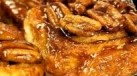
Sticky Bun Day
International Mother
Language Day *
____________________________________________
 Nicole Plyler Fisk
 Gene Howington
 FFS Guest Blogger
 Joy of Fishes
 Chuck Stanley
 shortfinals
 Terry Welshans
 ann li-summers
 wordcloud9


 Flowers For Socrates