Family resemblance in language is like relative autonomy in philosophy, because academic ideologies’ democracy is the Other to anti-intellectual reactionaries across the political spectrum, but are they the same as those of low-information voters (LIV), and more importantly, do their respective ideologies prevent one from in/direct action like civil obedience or disobedience. Will 8 November 2016 legitimate an illegitimate process at many levels or paint the future in blood, or neither. And in all that possible chaos, will you vote, or does it just encourage them. Sadly, one person’s denial is another’s failure of imagination.
The first was the limitations of its presidential nominee as a public speaker. Hillary Clinton’s shortcomings as an orator are not worth dwelling on at length, because, by this point in her public career, it is a fixed part of the equation. Her speech accepting the Democratic nomination was, in part, an attempt to work around that problem. In the film preceding the speech, a friend described her as a “workhorse, not a show horse.” And as she admitted, “Through all these years of public service, the ‘service’ part has always come easier to me than the ‘public’ part.”
and then there’s the amateur Left, consenting to governance and governmentality
The second problem was the determination by a faction of die-hard Bernie Sanders activists to disrupt the convention. The protesters began shouting on the first day, and despite urgent efforts to mollify them, their effect never fully disappeared.
The mostly friendly delegates were coached to break into chants to drown out the hecklers.
Whip it, whippet good!
Moar cowbell whistlers!
Republicans gleefully exploited the sometimes-awkward scenes…
Clinton showed that she is levelheaded, respectful of others, intelligent, well-informed, and very tough. In an election where sane and competent could form the basis for a rousing endorsement, she displayed more than enough.
People, I just want to say, can we all get along? Can we get along?
Some of us have never referred to ourselves as Independent voters and some are registered Democrats, and even vote straight line party votes (some of us can’t afford the time/money to be activists, and being here hopefully does sharpen the activist discourse). Fortunately, central tendency is not centrist tendency, as Blue-State voting allows for protest voting with less(sic) moral consequence, see vote swapping.
Some unfortunately have had some liberal(sic) education and actually like discussing “academic ideology” here and elsewhere, as if there was a non-academic version; oh wait…church. Darned praxis, the voting booth is still there… a closet for democratic process. The polls are not the polls. Has representation made the promise of democracy even less direct as the scale increases and “money is the mother’s milk of politics”.
Some have even self-deported in social media in terms of GBCW exit/voice. Others have gone through a variety of actions that could be interpreted as resistance resulting in site access suspension. Others might be interpreted, however unfortunately, by the RWNJ media as Pelosi Democrats and euphemistically referred to in recent discourse as “Stalinist” by some using without PC irony, the anti-Communist rubric of pre-fall Reaganism.
Trump would show up at several WrestleManias as a member of the audience, and was even interviewed in the crowd by Jesse “The Body” Ventura at WrestleMania XX in 2004. Ventura started things off by complimenting Donald’s hair (it should be noted “The Body” was wearing a bandana atop his head), then the former Minnesota governor teased a return to politics by asking Trump if he’d support him on a run for the White House. This prompted Jerry Lawler to wonder if we could someday see a ticket that included Trump. And we all just laughed. www.rollingstone.com/…
Elizabeth Alexander. The name may sound familiar. If I say “the inauguration of President Barak Obama,” a lightbulb might go off, because she was there, reading her poem for that momentous occasion, “Praise Song for the Day.”
Elizabeth Alexander (1962 — ) was born in Harlem, but as a child in a politically active family, she grew up in Washington, DC. Her mother, Adele Logan Alexander, is also a writer, and teaches African-American women’s history at George Washington University. Her father, Clifford Alexander Jr., is a former U. S. Secretary of the Army and and former Equal Employment Opportunity Commission chair. Her brother Mark was a senior adviser to the Obama presidential campaign and a member of the president-elect’s transition team.
Alexander as a toddler went with her family to the 1963 March on Washington to hear Dr. Martin Luther King’s “I Have a Dream” speech. “Politics was in the drinking water at my house,” she said, describing her childhood.
Almost every family has at least one relative who never quite fits in with the rest, but Alexander’s Great-Uncle Paul was a pretty extreme case.
Race
Sometimes I think about Great-Uncle Paul who left Tuskegee, Alabama to become a forester in Oregon and in so doing became fundamentally white for the rest of his life, except when he traveled without his white wife to visit his siblings— now in New York, now in Harlem, USA—just as pale-skinned, as straight-haired, as blue-eyed as Paul, and black. Paul never told anyone he was white, he just didn’t say that he was black, and who could imagine, an Oregon forester in 1930 as anything other than white? The siblings in Harlem each morning ensured no one confused them for anything other than what they were, black. They were black! Brown-skinned spouses reduced confusion. Many others have told, and not told, this tale. When Paul came East alone he was as they were, their brother.
The poet invents heroic moments where the pale black ancestor stands up on behalf of the race. The poet imagines Great-Uncle Paul in cool, sagey groves counting rings in redwood trunks, imagines pencil markings in a ledger book, classifications, imagines a sidelong look from an ivory spouse who is learning her husband’s caesuras. She can see silent spaces but not what they signify, graphite markings in a forester’s code.
Many others have told, and not told, this tale. The one time Great-Uncle Paul brought his wife to New York he asked his siblings not to bring their spouses, and that is where the story ends: ivory siblings who would not see their brother without their telltale spouses. What a strange thing is “race,” and family, stranger still. Here a poem tells a story, a story about race.
She got her B.A from Yale. Then her mother said to her, “That poet you love, Derek Walcott, is teaching at Boston University. Why don’t you apply?” Alexander originally entered studying fiction writing, but Walcott looked at her diary and saw the poetry potential. Alexander said, “He gave me a huge gift. He took a cluster of words and he lineated it. And I saw it.”
Racism in America isn’t just a Southern thing, and the loneliness of a college student away from home is universal. Fortunately, no region, or group or religion has a monopoly on kindness to strangers.
Boston Year
My first week in Cambridge a car full of white boys tried to run me off the road, and spit through the window, open to ask directions. I was always asking directions and always driving: to an Armenian market in Watertown to buy figs and string cheese, apricots, dark spices and olives from barrels, tubes of paste with unreadable Arabic labels. I ate stuffed grape leaves and watched my lips swell in the mirror. The floors of my apartment would never come clean. Whenever I saw other colored people in bookshops, or museums, or cafeterias, I’d gasp, smile shyly, but they’d disappear before I spoke. What would I have said to them? Come with me? Take me home? Are you my mother? No. I sat alone in countless Chinese restaurants eating almond cookies, sipping tea with spoons and spoons of sugar. Popcorn and coffee was dinner. When I fainted from migraine in the grocery store, a Portuguese man above me mouthed: “No breakfast.” He gave me orange juice and chocolate bars. The color red sprang into relief singing Wagner’s Walküre. Entire tribes gyrated and drummed in my head. I learned the samba from a Brazilian man so tiny, so festooned with glitter I was certain that he slept inside a filigreed, Fabergé egg. No one at the door: no salesmen, Mormons, meter readers, exterminators, no Harriet Tubman, no one. Red notes sounding in a grey trolley town.
Tyger Tyger, burning bright, In the forests of the night; What immortal hand or eye, Could frame thy fearful symmetry?
— from The Tyger by William Blake
The Big Cats —Lions, Cheetahs, Panthers, Snow Leopards, Mountain Lions, Tigers — all the deadly cousins of our domestic tabbies are in danger of extinction in most of the world. So it’s rare to have some good news to report.
The magnificent Siberian Tiger (also known as the Amur Tiger) is making a modest comeback. There’s no guarantee it will last, but their numbers in the wild have risen by about 15% over the past decade, according to Sergei Donskoi, head of the Russian Ministry of Natural Resources, citing a preliminary report last May.
Switzerland – Verbier Festival (Classical Music – through August 4)
United Kingdom – …Cumbria: Kendal Calling …Wiltshire: Womad
On This Day in HISTORY
1540 – Thomas Cromwell, Henry VIII’s chief minister, executed for treason
1635 – Robert Hook, astronomy- biology-light refraction pioneer, is born 1809 – Wellington’s British/Iberian troops defeat French at Battle of Talavera
1821 – José de San Martín declares Peru’s independence from Spain
1854 – The last all-sail U.S. Navy warship, USS Constellation, is commissioned
1866 – Beatrix Potter, beloved English author-illustrator of Peter Rabbit, is born
MORE! For Judy Garland, LBJ, Summer Jam and Summer Olympics, click
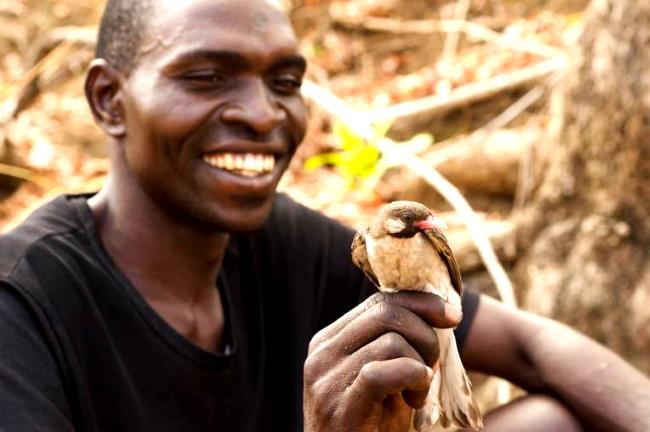
Mutualism: two organisms of different species in a relationship where each individual benefits from the activity of the other.
Honeyguides in northern Mozambique know when a Yao hunter makes a special trilling sound, he wants to find a bees’ nest — and its delectable honey. They will often lead humans to a nest in exchange for some honeycomb.
A honeyguide flies from tree to tree, calling and leading the person on, until the team reaches a bee nest. The person’s more risky job is to extract the honey from the nest.
1054 – Siward, Earl of Northumbria invades Scotland, defeating Scottish King Macbeth
1245 – Holy Roman Emperor Frederick II excommunicated by Pope Gregory IX for failing to honor his pledge to lead another Holy Land Crusade when Frederick turned back because of illness. Frederick’s governing policies at home helped establish the primacy of the Rule of Law, which made him unpopular with both clerics and nobles
1299 – (Traditional date) Osman I invades Nicomedia, founding day of Ottoman Empire
1549 – Jesuit Francis Xavier’s ship reaches Japan.
1663 – Parliament passes 2nd Navigation Act, requiring all goods bound for the American colonies to be sent in English ships from English ports
There’s MORE! For Van Gogh, Bugs Bunny and Mama Cass, just click:
On March 31, 1776, Abigail Adams penned a letter from their farm Peacefield to her husband, John Adams, laboring with the Continental Congress in Philadelphia to bring forth a new nation:
“…I long to hear that you have declared an independency. And, by the way, in the new code of laws which I suppose it will be necessary for you to make, I desire you would remember the ladies and be more generous and favorable to them than your ancestors. Do not put such unlimited power into the hands of the husbands. Remember, all men would be tyrants if they could. If particular care and attention is not paid to the ladies, we are determined to foment a rebellion, and will not hold ourselves bound by any laws in which we have no voice or representation.”
It was 144 years after Abigail’s letter desiring her husband to “remember the ladies” that American women finally got the right to vote all across the nation.
Today, 240 years after Abigail Adams wrote that famous letter, Hillary Rodham Clinton officially became the first woman candidate of a major political party for the Presidency of the United States of America.
It’s been a very long time coming, Abigail, and we still have so far to go, but I hope you are pleased this night.
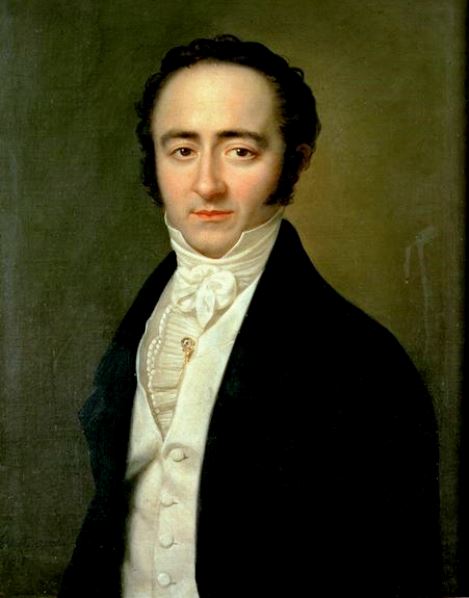
Franz “Wolfgang” was born in Vienna, five months before his father’s death, the younger of his parents’ two surviving children. He was a composer, pianist, conductor, and teacher from the late classical period whose musical style was of an early Romanticism, heavily influenced by his father’s mature style.
Overture in D major for orchestra – International New Symphony Orchestra Lemberg
Portrait of Franz Xaver Wolfgang Mozart by Karl Gottlieb Schweikart (1825)










 Nicole Plyler Fisk
 Gene Howington
 FFS Guest Blogger
 Joy of Fishes
 Chuck Stanley
 shortfinals
 Terry Welshans
 ann li-summers
 wordcloud9


 Flowers For Socrates